Data centers are among the most security-sensitive facilities in modern infrastructure — yet physical perimeter security is consistently overshadowed by the cybersecurity conversation. Firewalls and encryption matter, but they depend on something more fundamental: keeping unauthorized people and vehicles away from the building entirely. TYMETAL breaks down the physical systems that make a data center perimeter secure, from the fence line to crash-rated barriers to integrated access control.
Data Center Physical Security Requires More Than a Product List
The facilities being protected are not just buildings — they are the operational backbone of every organization that depends on them. A breach resulting in equipment theft, forced entry, or service disruption carries consequences that multiply across every tenant, client, and connected system the data center serves.
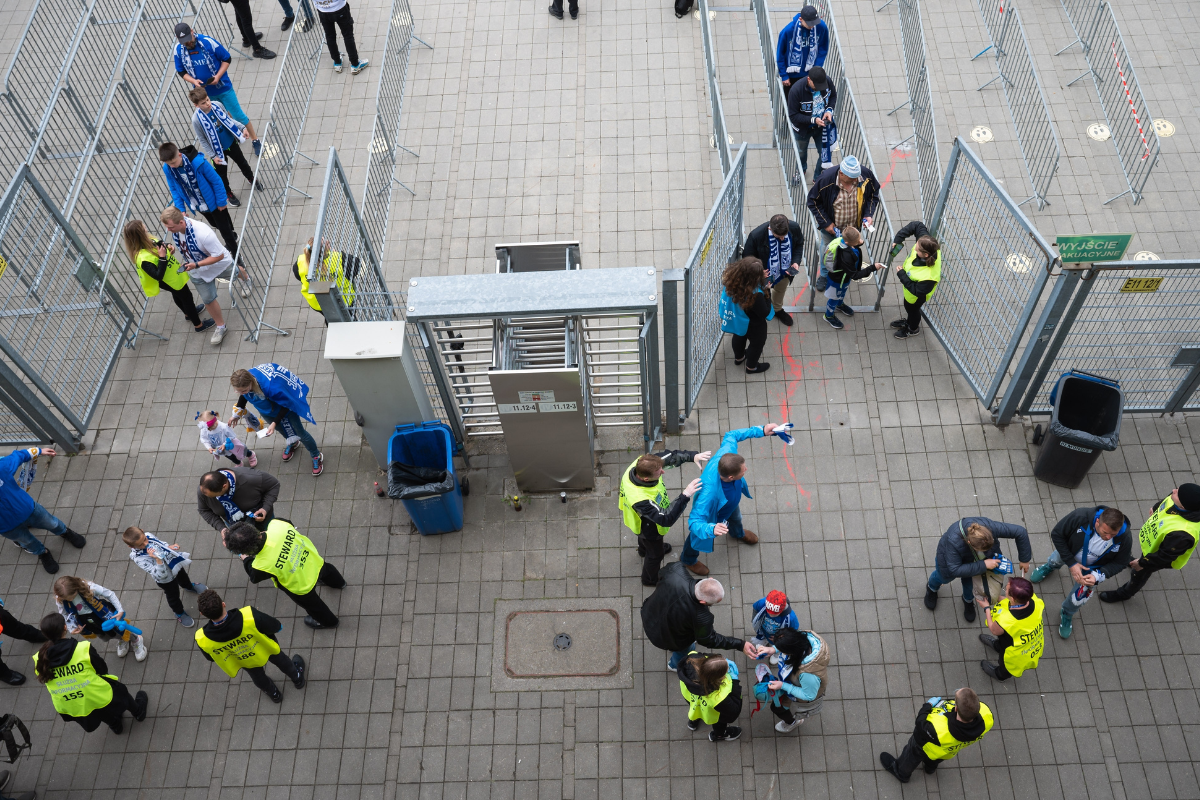
Compliance frameworks including SOC 2 and ISO 27001 establish a physical security baseline, but meeting a framework requirement and building a well-designed perimeter system are not the same thing. The baseline tells you physical controls are required. A threat assessment tells you what those controls need to stop. The threat vectors are consistent: unauthorized vehicle access, forced pedestrian entry, tailgating, and breach at unmonitored fence sections. What varies is the relative weight of each threat at a given site and the system design that follows.
No single perimeter element is sufficient. Effective data center perimeter security is a layered system where each component addresses a different threat vector and reinforces the others.
The Fence Line Is Where Perimeter Security Begins
Before gates, barriers, or access control can do their jobs, the perimeter has to be defined. Perimeter fencing establishes the secure boundary, separates the protected site from the surrounding environment, and forces all access toward controlled entry points. Without that structure, every other system layer loses effectiveness.
For data center applications, fencing specifications address height, material, and anti-climb characteristics. The locations that most often introduce vulnerability are not the main fence runs but the transitions: utility penetrations, drainage points, and grade changes where gaps are easier to miss and exploit. The role of fencing is to delay and redirect — buying time and creating structure for the systems behind it.
Data Center Security Gates and Vehicle Access Control
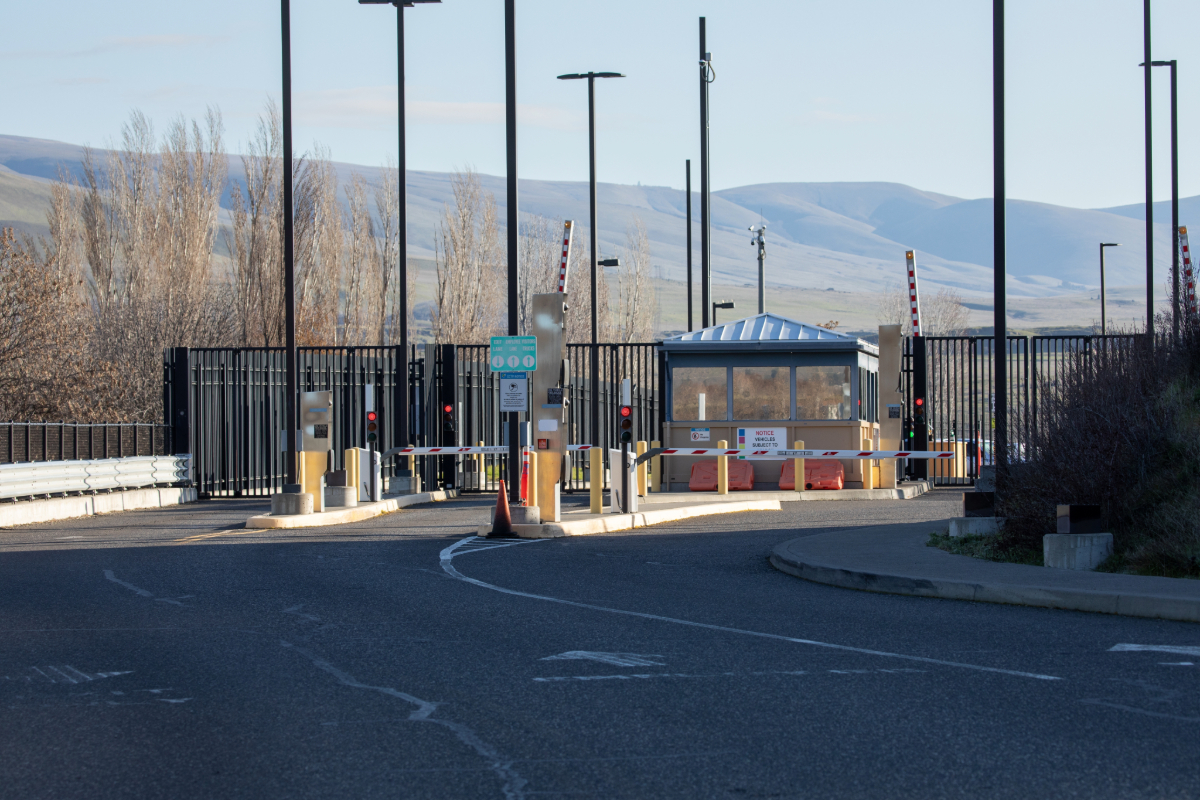
If fencing defines where the perimeter is, vehicle access gates define where and how it can be crossed. Security gates are where access decisions are made in real time, credentials are verified, and every entry and exit event is recorded. For a facility that never stops operating, the gate system needs to match that demand. Duty cycle ratings — describing how frequently a gate can cycle without performance degradation — are a critical specification criterion, not a secondary one.
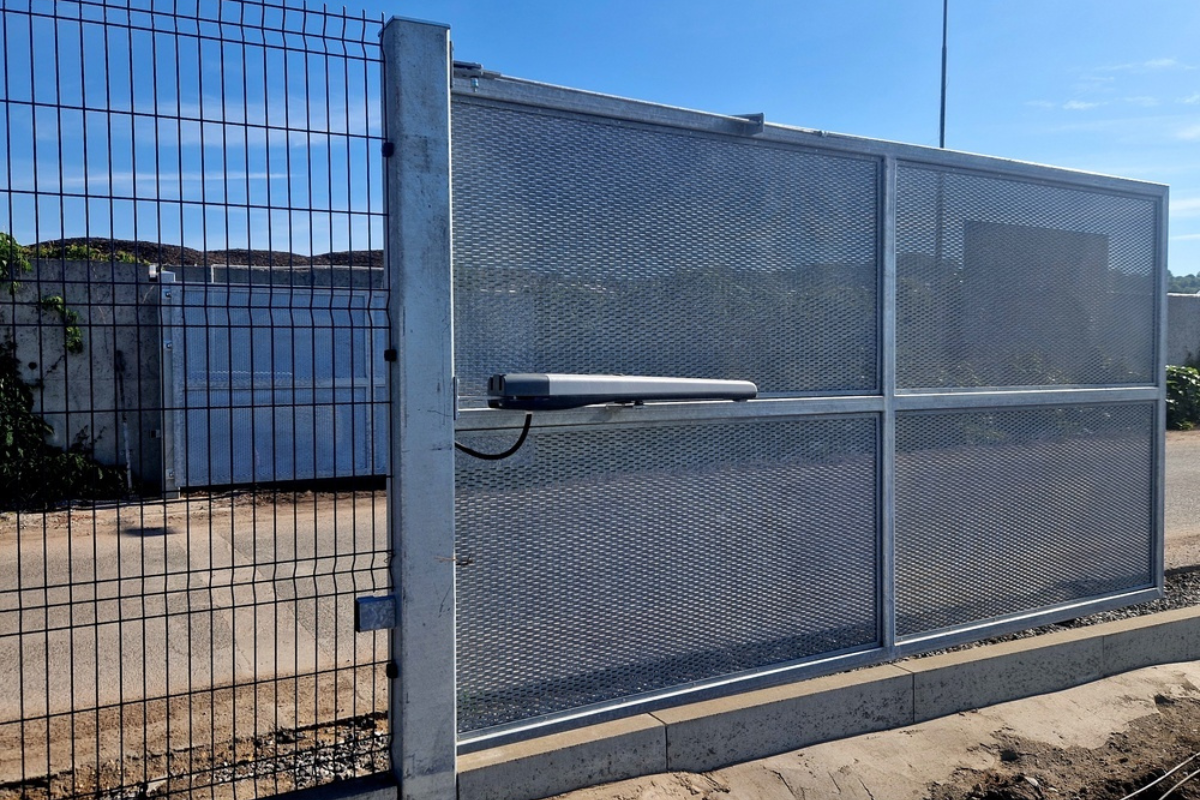
Gate type follows from the conditions at each access point. Cantilever slide gates are a common choice for primary vehicle entry: reliable across varied conditions and free of a roadway track that heavy traffic can damage over time. Overhead configurations serve different spatial and operational needs.
The gate connects to the access control platform at the entry point, tying every cycle to a verified credential, an intercom interaction where required, and a monitoring record — creating a unified, auditable account of every vehicle movement across the perimeter.
When Data Centers Need Crash-Rated Barriers and Bollards
A gate that opens and closes on a credential is not engineered to stop a vehicle that does not stop on its own. At high-consequence sites, those are two different problems requiring two different solutions.
Crash-rated barriers address the threat access control cannot — a vehicle driven deliberately at speed into the perimeter. Deployed at vehicle access points and along perimeter sections facing public roadways, they are tested and rated to stop vehicles of specific weights and speeds, with the rating also defining the maximum penetration distance following impact. ASTM and DOS standards provide the framework for comparing systems and matching ratings to a site’s threat profile. At high-risk data center sites, crash-rated barriers are a standard component, not an upgrade. The vehicle threat mitigation toolkit includes several distinct product types:
- Bollards protect building approaches and pedestrian areas where vehicle access is not permitted
- Beams span wider openings where a bollard array may not be practical
How Data Center Access Control Ties the System Together
Gates and barriers are physical infrastructure. What determines how effectively they perform is the access control and monitoring framework governing them. Consistent credential enforcement, documented access events, and the ability to review any entry point at any time convert physical assets into a functioning security system.
Perimeter-level access control includes credential management, visitor protocols, and audit trail capabilities at every controlled point — integrated with the facility’s broader security infrastructure so perimeter data feeds into the same platform managing access throughout the building. Camera coverage and intrusion detection complete the layer: what the gate logs, the camera records, all accessible through a unified interface for compliance reporting and incident review.
Planning and Specifying a Data Center Perimeter Security System
Perimeter security projects that begin with a product list instead of a site assessment tend to produce systems with gaps. The right starting point is a threat evaluation that establishes what the perimeter needs to stop. From there, a layered system design identifies the right combination of fencing, gates, barriers, and access control for the site’s specific conditions and threat profile.
Engaging a manufacturer before major specification decisions are locked produces better outcomes. Specifications should also account for what the facility will become: expansion plans, traffic growth, and evolving threat environments all affect what the system needs to support over its operational life.
TYMETAL has been manufacturing commercial and industrial perimeter security systems in the United States for more than 35 years. If you are planning or evaluating a data center perimeter security project contact our team, we are ready to help from the ground up.
Frequently Asked Questions
What is data center perimeter security?
Data center perimeter security is the system of physical controls protecting a facility’s outer boundary. It includes perimeter fencing, vehicle access gates, crash-rated barriers, and integrated access control — each layer targeting a different threat and working together to prevent unauthorized access and vehicle-based intrusion.
Why is physical security important for data centers?
Physical security is important because a breach can take down the digital infrastructure many organizations depend on. Unauthorized entry, equipment theft, or sabotage causes disruptions that extend well beyond the facility. SOC 2 and ISO 27001 both require physical security controls as part of a compliant data center operation.
What types of barriers are used at data centers?
Data centers use crash-rated barriers — including bollards, beam barriers, and crash-rated gate systems — at vehicle access points and perimeter sections facing public roadways. Each is engineered and tested to stop vehicles at defined weights and speeds, providing protection that standard fencing and access control gates are not designed to deliver.
Do data centers need crash-rated security gates?
Most high-risk data center sites include crash-rated barriers as part of their vehicle access systems. Whether a crash-rated gate specifically is required depends on the site’s threat assessment and available standoff distance. Where vehicle access must continue while the perimeter stays protected, a crash-rated gate is the appropriate solution.
How does access control integrate with a data center perimeter security system?
Access control connects to gate and barrier systems at each entry point, linking credential verification, intercom, and camera coverage into a single access event record. Every gate cycle is tied to a verified credential and captured in an audit trail that supports compliance reporting and incident review.