
For large commercial and industrial properties, perimeter security decisions carry long-term operational and financial impacts. Before selecting solutions such as commercial security gates or security barriers, organizations benefit from conducting a structured security risk assessment that evaluates site conditions, access patterns, and potential exposure across the entire perimeter. Using a defined framework helps ensure perimeter investments are intentional, scalable, and aligned with real site needs.
Introduction to Security Risk Assessment for Large Perimeters
In a physical security context, a security risk assessment is a process that identifies potential threats, analyzes perimeter vulnerabilities, and evaluates the consequences of security failures. For large commercial perimeters, this process is more complex due to extended boundaries, multiple access points, and diverse site activity.
Unlike smaller properties, large facilities cannot rely on visual checks or isolated upgrades for security. A structured assessment provides the foundation for selecting and placing perimeter systems, such as gates, fencing, and barriers, to support both protection and daily operations.
How Risk Assessment Frameworks Apply to Large Commercial Perimeters
A risk assessment framework establishes a consistent method for evaluating perimeter security across an entire site. Rather than reacting to individual concerns, frameworks guide teams through a systematic review of threats, vulnerabilities, and potential impacts.
This approach is especially relevant for industrial campuses, utility complexes, logistics centers, and multi-building commercial properties where perimeter conditions vary widely. Frameworks help decision-makers understand how different areas of the site interact and where perimeter controls will be most effective.
Key Components of a Large Perimeter Risk Assessment
Effective large-perimeter risk assessments typically include several core components:
- Threat Identification: Evaluates security concerns relevant to the site based on location, usage, and surrounding environment.
- Vulnerability Mapping: Reviews perimeter continuity, access point density, and site layout to identify potential weaknesses.
- Asset Criticality: Determines which areas or operations require higher levels of perimeter protection.
- Risk Prioritization: Ranks risks by likelihood and impact to guide planning and investment decisions.
Together, these elements provide a clear picture of where perimeter security efforts should be focused.
Turning Risk Assessment Insights Into Smarter Security Decisions
Risk assessment findings help organizations move beyond general awareness and into focused, informed planning. For large commercial perimeters, assessments often reveal patterns such as inconsistent access control, vehicle exposure near key entry points, and misalignment between perimeter design and day-to-day site operations.
Using a structured risk assessment framework adds clarity to these findings and helps teams prioritize actions with confidence. Assessment data informs decisions around perimeter layout, system selection, and placement while supporting coordinated planning across security, facilities, and operations.
Financially, this approach helps control costs by directing investment where it delivers the greatest impact. Strategically, it ensures perimeter systems can adapt as sites grow or change. Industry resources such as Vehicle Security Barrier Trends further support decision-making by providing insight into performance standards, testing criteria, and evolving barrier technologies.
Implementing a Risk Assessment Framework for Large Perimeters
Organizations typically begin by documenting existing site conditions, access patterns, and operational requirements. Collaboration between security, facilities, and operations teams ensures assessments reflect how the site functions in practice.
Assessment results are then translated into planning documentation that guides perimeter design and solution selection. Some organizations manage this process internally, while others rely on external specialists. For additional guidance on linking assessment outcomes to perimeter strategy, the Physical Security Guide provides helpful context.
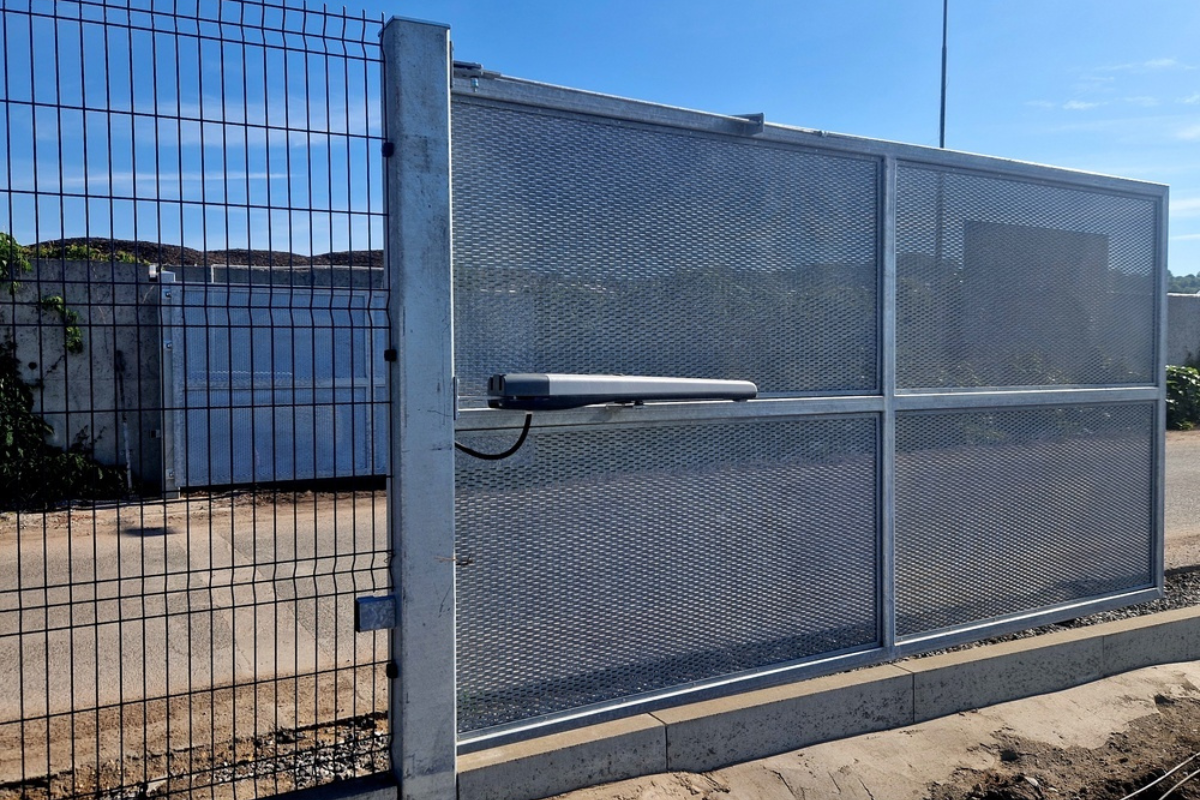
When planning transitions to implementation, perimeter solutions such as commercial security gates and security barriers play a critical role in addressing identified risks. Partnering with an experienced provider like TYMETAL helps ensure these systems are properly aligned with site conditions and long-term security objectives. To discuss assessment-driven perimeter solutions, connect with experts at TYMETAL.
Frequently Asked Questions
How often should large commercial perimeters undergo a formal security risk assessment?
Large commercial perimeters should undergo a formal security risk assessment on a regular cycle, typically annually, or sooner if site conditions change. Assessments should always be revisited following expansions, changes in site use, or significant operational shifts. Regular reassessment helps ensure perimeter security remains aligned with current risks rather than outdated assumptions.
What are the most common mistakes organizations make during perimeter risk assessments?
Common mistakes include focusing only on individual access points instead of evaluating the entire perimeter, relying on informal observations rather than structured frameworks, and overlooking how daily operations interact with security systems. These gaps often result in security gates or barriers being selected without proper technical alignment, which can be avoided by referencing detailed product specifications and drawings early in the planning process.
How do risk assessment frameworks adapt as sites expand or change use over time?
Risk assessment frameworks are designed to scale as sites grow or evolve. When new buildings, access points, or operational functions are introduced, frameworks allow teams to reassess threats and vulnerabilities without starting over. This adaptability supports informed updates to security gates and perimeter systems and helps teams verify feasibility.
When should perimeter risk assessments be revisited after security upgrades?
Perimeter risk assessments should be revisited after major security upgrades to confirm that implemented systems are performing as intended and that new risks have not been introduced. Post-installation reviews help validate design assumptions, identify operational impacts, and ensure perimeter systems remain aligned with overall security objectives.
How should findings from a security risk assessment influence barrier and access control planning?
Findings from a security risk assessment should directly guide barrier selection, access control placement, and perimeter layout. Assessment data highlights where vehicle exposure, access concentration, or operational conflicts exist, allowing organizations to choose solutions that balance protection with functionality. Using risk-based insights ensures barriers and access systems are deployed where they deliver the greatest security value.