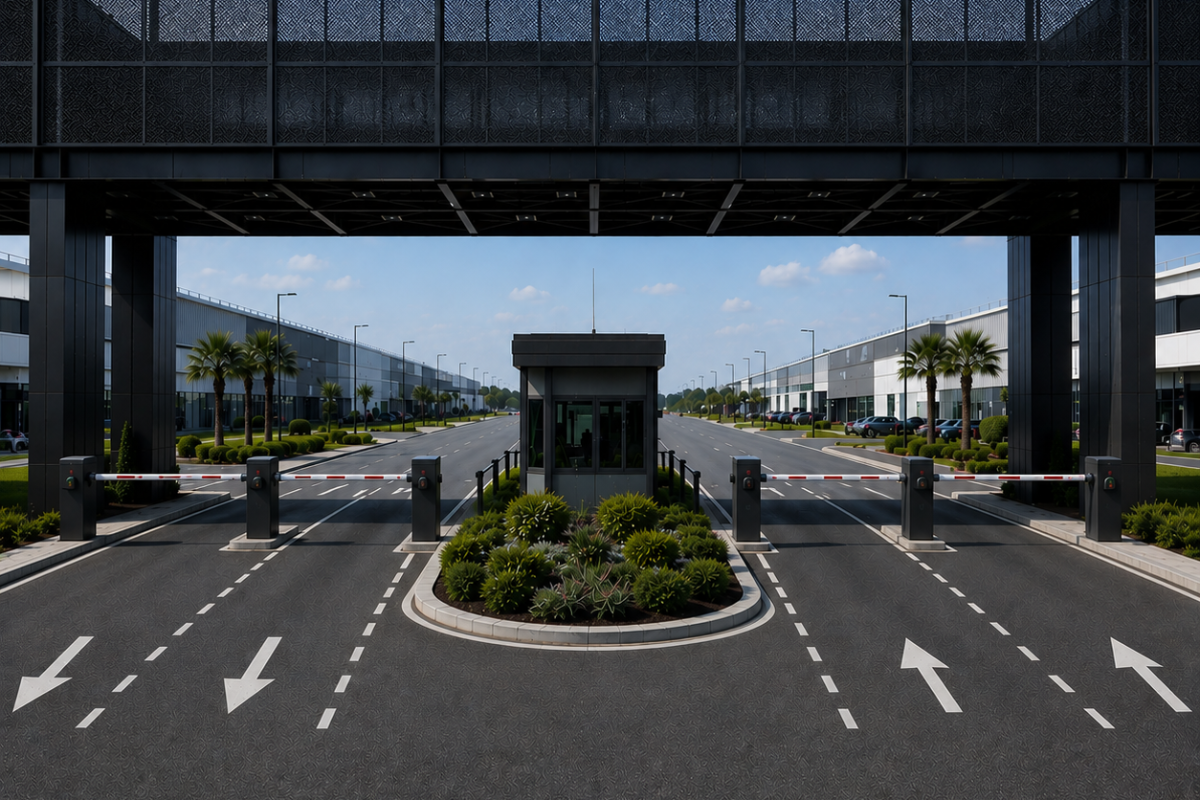
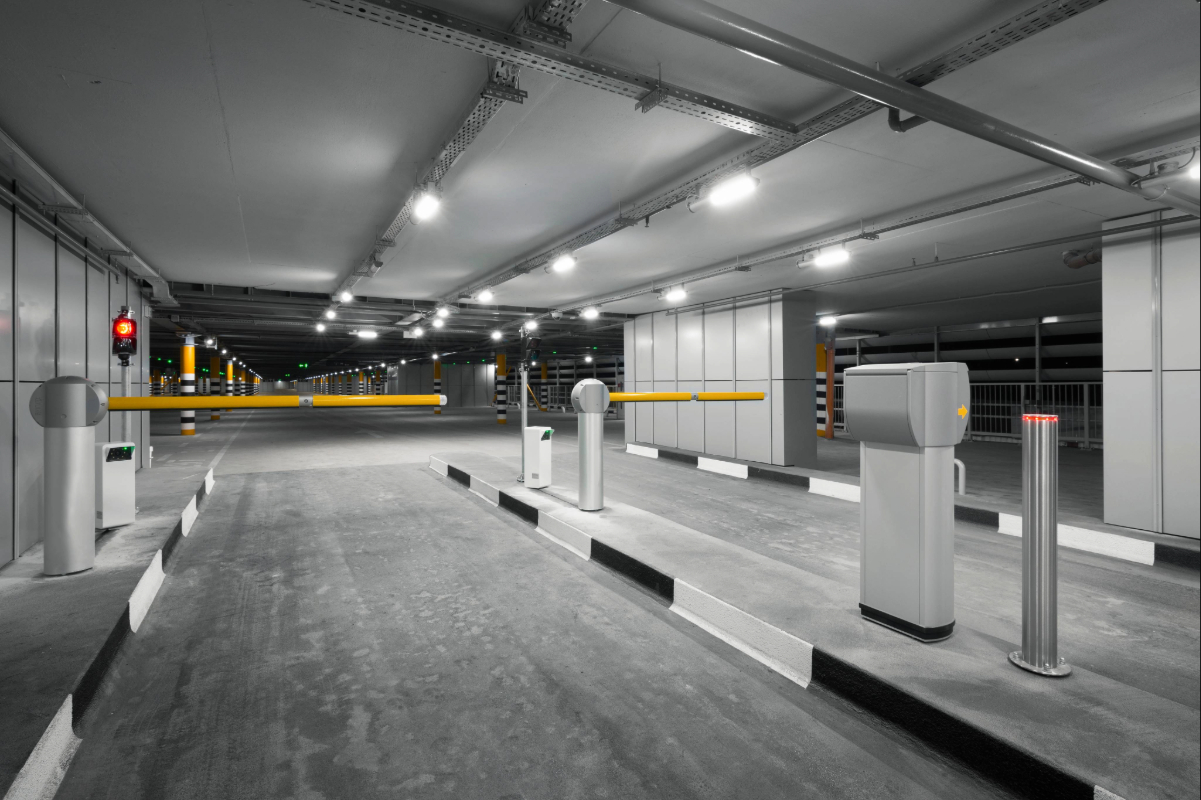
Issues related to unauthorized vehicles, after-hours access, and unmonitored entry points create persistent challenges for commercial parking facilities. Installation of automated gate systems effectively address all three of these issues, providing facility managers with reliable control without needing to rely on onsite personnel for every access decision.
Why Parking Lot Security Is a Priority for Commercial Facility Managers
For many facilities, the parking lot is the first and last point of contact between a property and the public. Without a structured access system, commercial lots are vulnerable to unauthorized entry, vandalism, overnight loitering, and liability exposure that can extend well beyond the physical damage itself.
The industries that are most affected tend to be those with a defined population of authorized users and little tolerance for access gaps. For example, airports manage constant vehicle flow across multiple restricted zones. Data centers and government buildings require strict separation between public areas and secured perimeters. Correctional facilities depend on precise vehicle control at every entry and exit point. Universities and military bases contend with large campuses with multiple access points needing to operate under consistent policies.
Attendant-based security models are increasingly difficult to sustain across these environments. Staffing costs continue to rise, resulting in inconsistent coverage hours, and human oversight alone cannot provide the audit trail that facility operators now require for incident response and liability documentation. Automated vehicle access control fills that gap in a way that is both cost-effective and scalable.
How Automated Parking Gates Work
At their core, automated parking gates manage credentialed entries and exits. A vehicle approaches an entry point, presents a valid credential, and the gate or barrier arm opens. When a credential is not recognized, the gate remains closed.
Barrier arm gates are the most common configuration in commercial settings. The arm extends horizontally across the drive lane and lifts to allow passage, processing vehicles quickly without the full cycle of a swing or slide gate. Credential options include key fobs, proximity cards, keypads, and intercom systems for visitor or delivery verification. The right approach depends on who needs access, how frequently that list changes, and the security level each entry point requires.
Security Benefits of Automated Gate Systems for Parking Facilities
The most immediate benefit is deterrence. Vehicles without credentials cannot enter, which discourages opportunistic trespassing and the kind of after-hours activity that tends to result in problems. A controlled entry point signals that the facility is monitored and that access is not available to anyone who simply drives up.
Automated systems also consistently enforce access policies. A staffed gatehouse depends on judgment that can vary by shift or circumstances. An automated gate applies the same rules every time, regardless of time of day or traffic volume. For facilities with multiple entry points, that unbudging consistency eliminates the weak link that could result from staffed entrances.
Gates also function as one layer within a broader security strategy. They do not replace lighting, surveillance, or perimeter fencing, but they complement those systems by reducing the number of unverified vehicles on the property.
Barrier Arms vs. Full Gate Systems
The choice between a barrier arm/beam and a full gate system depends on the function the entry point serves and the security profile required.
Barrier arms suit higher-traffic access points where throughput matters. Airport employee lots, university service entrances, and facilities with frequent contractor access benefit from a gate that moves quickly without creating backups. They are also more cost-effective where the primary goal is access management rather than physical intrusion resistance.
Full gate systems, including swing and slide configurations, are better suited to environments where the gate itself needs to serve as a physical barrier. Secured zones on military bases, restricted areas within correctional facilities, and data center access points are examples where a more substantial system is warranted. These gates close off entry points entirely and are designed to withstand more forceful bypass attempts.
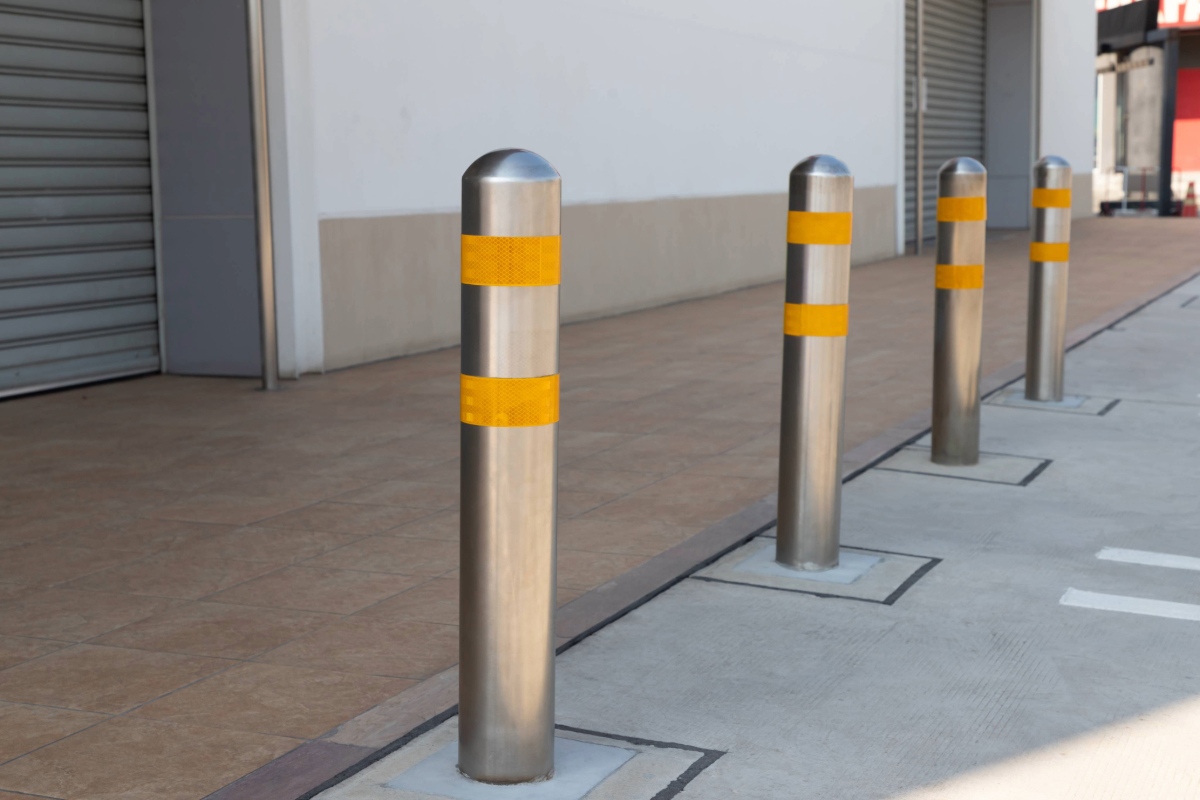
For facilities with elevated threat profiles, crash-rated systems provide vehicle intrusion resistance that standard gates cannot offer. These are tested and rated to stop vehicles at specific speeds and weights, making them appropriate for government installations, military facilities, and other sites where vehicle-borne threats are a genuine consideration.
Partnering with TYMETAL for Parking Lot Security That Performs
Securing a commercial parking facility requires more than a single product. It requires a system where every entry point is controlled, access decisions are enforced consistently, and the equipment is built to hold up under daily operational demands.
TYMETAL has been engineering commercial gate systems and perimeter security solutions for more than 35 years, with products manufactured in the USA and designed for facilities where access control is not optional. If you are evaluating automated gate options for your parking facility, we are a resource worth engaging early. Reach out to our team to learn more on creating a parking lot security system that works for your specific facility needs.
Frequently Asked Questions
How do automated gates improve parking lot security?
Automated gates improve parking lot security by restricting vehicle access to credentialed users only, eliminating the inconsistency of attendant-based entry management. For facilities like airports, military bases, correctional facilities, and data centers, this means every entry point operates under the same policy around the clock, regardless of staffing levels or time of day. Unauthorized vehicles are stopped at the perimeter rather than managed after the fact, which reduces trespassing, deters opportunistic incidents, and supports a broader layered security strategy alongside fencing, lighting, and surveillance.
What is the difference between a barrier arm and a parking gate?
A barrier arm is a single horizontal arm that extends across a drive lane and lifts to allow passage. It is designed for high-throughput environments where speed of entry matters, such as airport employee lots, university campuses, and facilities with frequent contractor or vendor traffic. A full parking gate, such as a swing or slide gate, closes off the entry point entirely and provides a higher level of physical resistance. Full gate systems are better suited to secured perimeters at military installations, correctional facilities, and other sites where the gate itself needs to function as a barrier, not just a checkpoint.
Can automated parking gates integrate with existing access control systems?
In most commercial installations, automated parking gates are designed to work alongside existing access control infrastructure rather than replace it. Credential systems such as key fobs, proximity cards, and keypads can typically be tied into a facility’s broader access management platform. For campuses and multi-building facilities like universities, government complexes, and data centers, this allows vehicle access points and building entry points to operate under a unified credentialing system, simplifying administration and reducing the risk of access gaps across the property.
How long do commercial parking gate systems last?
With proper installation and routine maintenance, commercial parking gate systems are generally built for long-term operation in demanding environments. High-cycle barrier arms used at busy facilities like airports or military bases are engineered to handle thousands of cycles per day over many years. Full gate systems installed at secured perimeters are similarly built for durability under continuous use. Actual service life varies, depending on cycle volume, environmental conditions, and maintenance practices, but commercial-grade systems from established manufacturers are designed with longevity as a baseline expectation rather than a premium feature.