Bollards are among the most widely used vehicle barriers in perimeter security, appearing at everything from federal buildings and airports to sports arenas and retail centers. Despite their prevalence and popularity, selecting the right type of bollard is not simple, as the decision carries real consequences for site security, operational flow, and long-term cost.
The most fundamental choice starts with evaluating two categories: fixed bollards versus retractable (or removable) bollards. Each serves a distinct purpose, and understanding the differences can help facility managers, security planners, and site owners make a more informed selection.
What Are Bollards and Why Do They Matter?
Bollards are short, sturdy vertical posts installed to control or restrict vehicle access to a defined area. They serve as a physical barrier that is capable of stopping or redirecting vehicles before they can reach pedestrians, structures, and other critical assets.
The range of available bollard types is broad. At one end of the spectrum, decorative bollards provide aesthetic separation between vehicle and pedestrian zones. At the other end of the spectrum, high-security, crash-rated and anti-ram bollards are engineered and tested to stop loaded vehicles traveling at high speeds. The right type to choose depends on the threat environment, the site’s operational requirements, and any applicable compliance standards.
In short, getting the selection right matters. The bollard type you choose affects not only how well a perimeter performs under threat conditions, but also how efficiently the site operates day to day and what ongoing maintenance and cost implications look like over time. The core decision addressed here is the one most operators face first: fixed or retractable.
Fixed Bollards
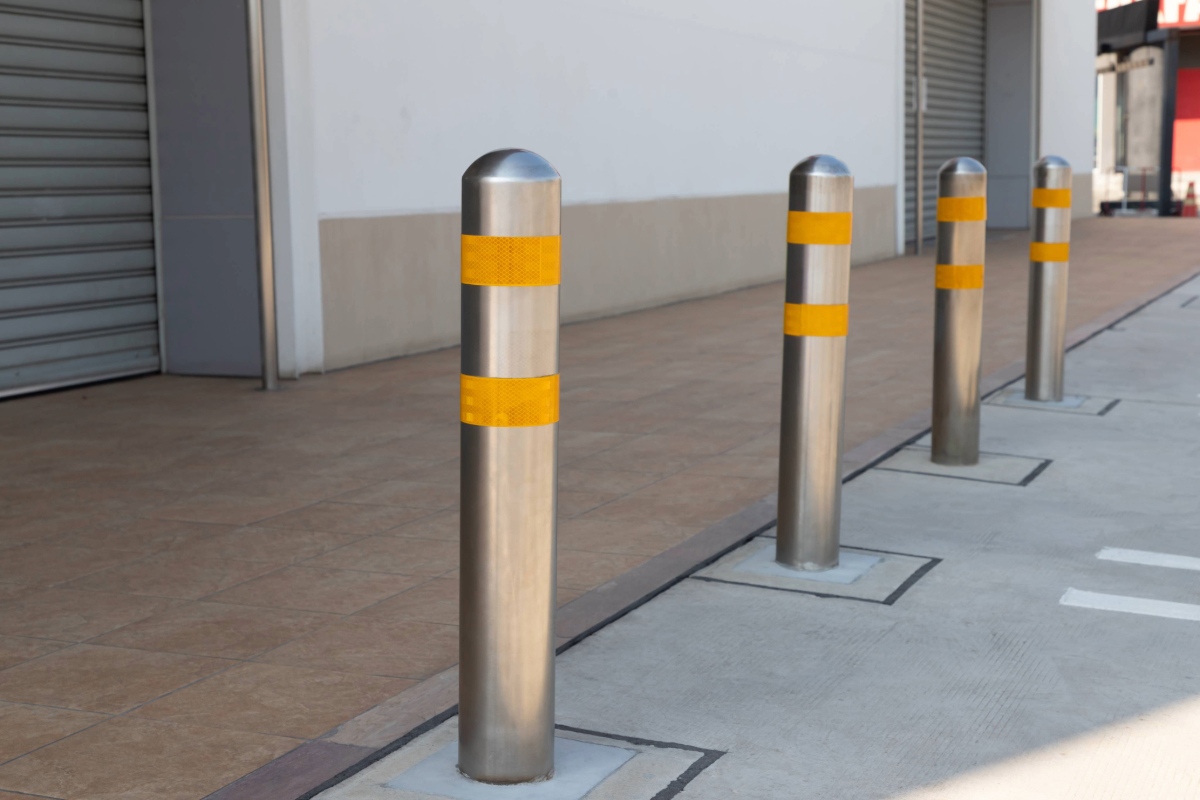
Fixed bollards are permanently anchored into the ground through deep foundation sleeves or embedded anchor systems. Once installed, they remain in place and provide continuous, passive protection without any operational input required.
This makes them a natural fit for locations where the security perimeter is clearly defined and routine vehicle access is not needed within the protected zone. Common applications include pedestrian plazas, building entrances, utility protection areas, government and military installations, and critical infrastructure sites.
Advantages of Fixed Bollards
The primary strength of fixed bollards is reliability. With no moving parts or mechanical systems involved, they require minimal maintenance and carry no risk of mechanical failure. They provide consistent, around-the-clock protection, regardless of staffing levels or power availability.
Over the life of the installation, that simplicity also translates to reduced cost. In most cases, fixed bollards carry lower total lifecycle costs, compared to more mechanically complex alternatives, making them a practical long-term investment for sites with stable, predictable access patterns.
Limitations of Fixed Bollards
The trade-off is flexibility. Fixed bollards do not accommodate authorized vehicle access without a gap or opening that is deliberately designed into the layout. Sites that require periodic vehicle entry for deliveries, maintenance, or emergency response must plan for those access points separately.
This means placement decisions need to be made early in the site design process. Adjustments after installation can be disruptive and costly, which means fixed bollards generally only reward businesses with careful upfront planning.
Retractable and Removable Bollards
Retractable and removable bollards offer the security benefits of a bollard with the added ability to open a passage when needed. The two terms are sometimes used interchangeably, but they refer to slightly different mechanisms. Retractable bollards lower into a below-grade housing, either manually or through an automated system. Removable bollards are manually lifted out of a ground sleeve and stored elsewhere until needed.
Both types are designed for sites where vehicle access requirements change regularly or where the same passage must serve both secured and open states at different times. Typical applications include event venues, university campuses, mixed-use developments, loading zones, and emergency vehicle access lanes.
Advantages of Retractable Bollards
The defining advantage is operational flexibility. Retractable and removable bollards allow a site to maintain a secure perimeter during restricted hours or elevated threat conditions but then open access when appropriate, without removing the barrier infrastructure from the site entirely.
When properly managed, retractable bollards in the raised position can match the crash-resistance performance of fixed bollards. That means security posture does not have to be compromised in exchange for access flexibility, provided the right product is selected and protocols are followed.
Limitations of Retractable Bollards
Greater flexibility comes with greater complexity. Retractable bollards require more elaborate installation, including below-grade housing that must be properly drained and maintained. Automated variants introduce hydraulic or electric systems that require regular servicing to remain reliable.
Manual removable bollards place the responsibility for consistent security on the personnel managing them. In high-traffic environments, that operational discipline can become a vulnerability if procedures are not followed correctly and consistently.
Initial costs are also typically higher than comparable fixed installations, particularly for automated systems. That investment can be justified by the operational requirements of the site, but it is a factor worth accounting for in the planning process.
How to Choose the Right Bollard Type for Your Site
Selecting between fixed and retractable bollards comes down to a few key variables: the nature of the threat, how frequently authorized vehicle access is required, the site’s operational model, and any applicable compliance requirements.
A federal facility with a hardened perimeter and no civilian vehicle access is a natural fit for fixed, crash-rated bollards. A city plaza that hosts weekly vendor markets and public events may be better served by a retractable system that can be opened for setup and closed during event hours. A hospital emergency entrance might call for removable bollards that can be quickly cleared for incoming vehicles but remain in place at all other times.
In many cases, the most effective approach is a combination: fixed bollards establishing the primary perimeter, with retractable or removable units at designated entry points. Security consultants and manufacturers with deep product expertise can help identify the configuration that best fits a given site’s threat environment and operational requirements.
Crash Ratings and Compliance Considerations
For facilities where stopping a vehicle under threat conditions is a defined requirement, crash ratings should factor into any bollard selection. Two of the most commonly referenced standards in the United States are ASTM F2656, which evaluates vehicle impact performance in terms of penetration distance, and the U.S. Department of State SD-STD-02.01 standard, which appears frequently in federal security specifications.
Both fixed and retractable bollards can be engineered to meet these ratings. What matters is that the selected product has been tested and certified to the appropriate standard for the application. It is also worth noting that a crash-rated bollard installed incorrectly will not perform to its rated capacity. Correct installation to manufacturer specifications is as important as the product rating itself.
Selecting a Bollard Solution for Your Site
Choosing the right bollard involves evaluating how the installation will be used and what the site requires over the long term. A few key considerations are worth working through before specifying a product.
Access frequency and operational model should drive the fixed versus retractable decision. Crash-rating requirements should be defined by the site’s threat level and any applicable compliance obligations. Material and finish selection should account for the environment, particularly on coastal or high-moisture sites where corrosion resistance matters. Compatibility with existing or planned access control and monitoring systems is worth confirming before committing to a product.
Manufacturer support is also a practical consideration. Warranty terms, domestic parts availability, and the ability to support custom fabrication for complex site conditions all affect long-term performance and serviceability.
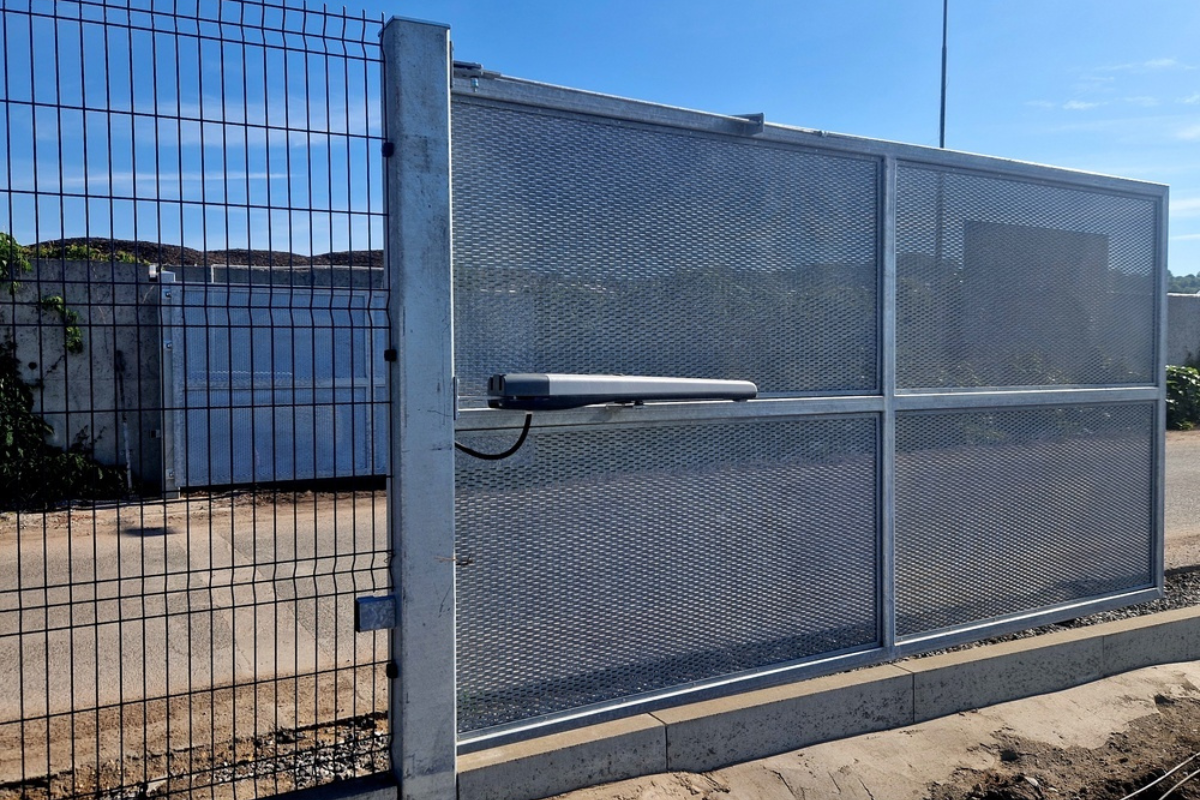
TYMETAL manufactures a range of perimeter security products designed for demanding real-world environments, including bollard systems, cantilever slide gates, crash barriers, and custom fabrication for complex project requirements. With more than 35 years of U.S. manufacturing experience from facilities in New York and Texas, TYMETAL brings the product expertise and production capability to support projects from standard installations to highly specified custom applications. If you are evaluating a bollard solution for your site, we welcome the opportunity to discuss your requirements.
Frequently Asked Questions
What does it mean for a bollard to be crash-rated?
A crash-rated bollard has been tested against a standardized vehicle impact scenario and verified to stop or significantly limit the penetration of a vehicle of a defined weight traveling at a defined speed. Crash ratings are assigned based on how much the vehicle penetrates beyond the barrier line after impact. A bollard that has not been tested and certified to a recognized standard should not be assumed to provide the same level of vehicle arrest performance as one that has been tested, even if it appears structurally similar.
What is the difference between a retractable bollard and a removable bollard?
A retractable bollard lowers into a below-grade housing when vehicle access is needed and rises back into position to restore the barrier. This can be operated manually or through an automated hydraulic or electric system.
A removable bollard is manually lifted out of a surface-mounted ground sleeve and stored elsewhere, then replaced when the passage needs to be closed again.
Both allow controlled vehicle access, but retractable bollards are better suited to higher-frequency use or automated access management, while removable bollards are a practical choice for lower-traffic applications where manual operation is manageable.
Can retractable bollards achieve the same crash rating as fixed bollards?
Yes. Retractable bollards can be engineered and tested to meet the same crash-rating standards as fixed bollards when in the raised position. The key requirements are that the product has been tested and certified to the applicable standard and that installation follows manufacturer specifications precisely.
A crash-rated retractable bollard that is improperly installed will not perform to its rated capacity, regardless of the product’s certification. For sites that require both operational flexibility and verified vehicle arrest performance, crash-rated retractable bollards are a viable solution.
What ASTM or DoS standards apply to security bollards?
The two most commonly referenced standards for crash-rated bollards in the United States are ASTM F2656 and the U.S. Department of State SD-STD-02.01. ASTM F2656 evaluates a barrier’s vehicle impact performance by measuring how far a vehicle penetrates beyond the barrier line after a defined impact test. The DoS SD-STD-02.01 standard is frequently cited in federal and government facility security specifications.
Both standards apply to fixed and retractable bollard types. The appropriate standard for a given project depends on the facility type, threat assessment, and any applicable compliance requirements.
What are the installation requirements for security bollards?
Installation requirements vary, depending on bollard type and the crash-rating level required. Fixed bollards typically require a reinforced concrete foundation or embedded anchor sleeve to achieve the structural depth needed for vehicle arrest performance.
Retractable bollards require below-grade housing with adequate drainage to prevent water accumulation and corrosion over time. For any crash-rated bollard, the installation must follow manufacturer specifications exactly, as deviations can compromise rated performance.
Site conditions such as soil type, underground utilities, surface materials, and drainage characteristics all factor into installation planning. Engaging the manufacturer or a qualified installer early in the process helps ensure the installation is matched to both site conditions and performance requirements.
What bollard types are best suited for government or federal facilities?
Government and federal facilities typically require bollards that meet verified crash-rating standards, most commonly ASTM F2656 or the U.S. Department of State SD-STD-02.01, that are certified through recognized testing programs. Fixed, crash-rated bollards are commonly specified along hardened perimeters where no routine civilian vehicle access is required, as they provide continuous passive protection with minimal maintenance requirements.
Retractable crash-rated bollards are often used at controlled entry points where authorized vehicle access must be managed. The right configuration depends on the facility’s threat assessment, access control requirements, and the specific federal security standards that apply to the project.