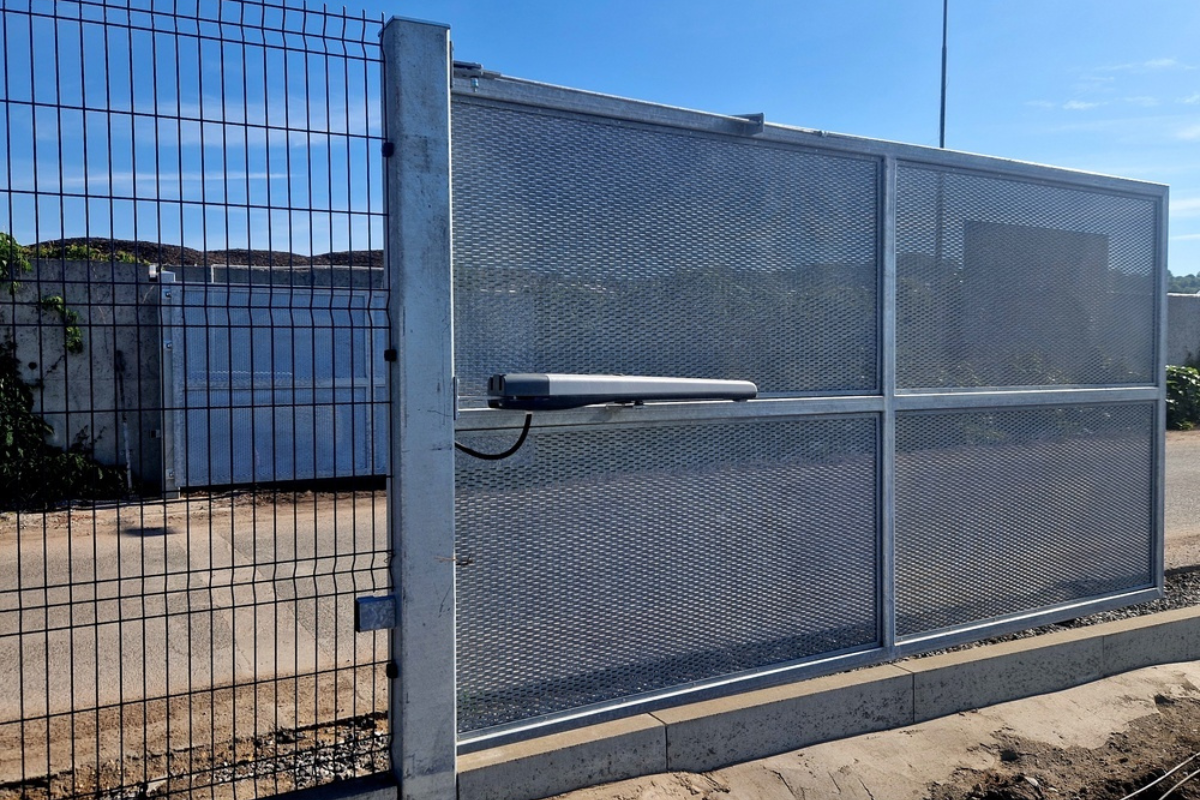

Unauthorized access rarely occurs through dramatic breaches. More often, it happens when an individual follows an authorized person through a secured entry point or at a security gate without presenting credentials. This practice, known as tailgating or piggybacking, presents a persistent challenge for commercial and critical infrastructure facilities.
While perimeter protections such as commercial security gates and reinforced entry systems help control vehicle and site-level access, interior entry points can still present vulnerabilities if they are not properly managed. Understanding how anti-tailgating devices work and where they fit within a broader physical security strategy is essential to maintaining controlled access throughout a facility.
For organizations assessing potential access control gaps or planning security upgrades, connecting with TYMETAL, an experienced perimeter security provider, can help determine where anti-tailgating systems support a layered security approach.
What Is Anti-Tailgating Technology?
Anti-tailgating technology is designed to prevent unauthorized individuals from entering a secured area by following an authorized credential holder onto the site. Basically, tailgating occurs when someone gains access by closely trailing a person who has been properly authenticated. Piggybacking refers to a similar scenario, sometimes involving cooperation from the credential holder.
Standard access control systems, such as card readers or keypads, verify credentials but do not always confirm that only one person enters per authorization. This gap can expose facilities to unauthorized entry, despite having credential-based access control in place.
For commercial facilities, data centers, utilities, and other high-security environments, anti-tailgating systems provide an additional enforcement layer. In short, they help ensure that access control policies are physically upheld at the point of entry.
How Anti-Tailgating Systems Work
An anti-tailgating system verifies both identity and entry behavior. When an individual presents credentials, the system validates authorization through the facility’s access control platform. At the same time, integrated detection sensors monitor how many individuals attempt to pass through the entry point. If more than one person attempts to enter during a single authorization cycle, the system can deny entry, trigger an alarm, or alert security personnel.
One form of this technology is sometimes referred to as a detective door. A detective door is a secured entry enclosure that uses sensors to detect multiple occupants or abnormal movement patterns. If unauthorized entry is detected, the door can remain locked or initiate a controlled response.
Anti-tailgating systems integrate directly with existing access control systems, allowing centralized monitoring, reporting, and policy enforcement.
Key Components of an Anti-Tailgaiting System
An effective anti-tailgating system includes several coordinated components:
- Detection Sensors: Infrared, optical, or weight-based sensors identify how many individuals enter during a credential cycle. These sensors are calibrated to distinguish between normal entry and unauthorized following.
- Credential Verification: Card readers, biometric scanners, or keypad systems confirm user authorization before access is granted.
- Locking Mechanism: Controlled doors, sliding panels, or secured enclosures physically restrict entry when a violation is detected.
- Alert & Monitoring Systems: Integrated alarms, security dashboards, and logging systems notify staff and record events for compliance and auditing purposes.
Why Facilities Are Adopting Anti-Tailgaiting Devices
Unauthorized entry can compromise safety, disrupt operations, and expose facilities to regulatory risks. In sectors such as utilities, data centers, healthcare, and government, maintaining strict access control is often tied to compliance requirements and operational continuity.
Facilities also recognize that credential systems alone do not fully address human behavior. Anti-tailgating technology reinforces policy at the physical entry point, as well as at all security gates surrounding the property.
Within a layered security model, these systems function alongside perimeter controls such as fencing, controlled vehicle access points, and final denial barriers. For broader guidance on developing a layered approach, organizations can reference the Physical Security Guide to better understand how access control integrates with perimeter hardening.
Implementing an Anti-Tailgaiting System
Implementation begins by identifying areas where tailgating risk is highest, such as employee entrances, all points where security gates are present, restricted interior zones, data rooms, and transitions between public and secured spaces. These locations should be evaluated based on traffic volume, operational flow, and the sensitivity of the protected area.
Once risk points are defined, facilities can select the appropriate integration needs. Whether deploying compact sensor-based solutions or fully enclosed detective door systems, integration with existing access control and monitoring platforms is essential. Post-installation testing and ongoing monitoring ensure the system performs consistently under real-world conditions and supports operational efficiency.
Anti-tailgating technology is most effective when incorporated into a comprehensive physical security strategy that aligns interior enforcement with perimeter protection. Organizations that want to evaluate access control vulnerabilities or plan security upgrades can contact TYMETAL to discuss anti-tailgating solutions and how it integrates within a layered perimeter security framework.
Frequently Asked Questions
What operational challenges can occur when installing an anti-tailgating device in an existing facility?
Installing an anti-tailgating device in an existing facility can introduce challenges related to space constraints, traffic flow, and integration with legacy access control systems. Older buildings may require door frame modifications, electrical updates, or reconfiguration of entry points to accommodate detection sensors and locking mechanisms.
Operationally, facilities must also manage temporary disruptions during installation and train staff on new entry procedures. Proper planning and testing are critical to ensure the anti-tailgating system enhances security without creating bottlenecks or workflow inefficiencies.
How do anti-piggybacking sensors perform in high-traffic environments?
Anti-piggybacking sensors are designed to perform reliably in high-traffic environments when properly calibrated and matched to throughput requirements. Advanced infrared and optical detection systems can distinguish between a single authorized user and multiple individuals attempting entry during one credential cycle.
In high-volume facilities such as corporate campuses or data centers, system selection must consider door cycle speed, sensor sensitivity, and user behavior patterns. When engineered correctly, anti-tailgating systems can maintain enforcement consistency without slowing authorized entry.
What are common misconceptions about detective doors and tailgating prevention?
A common misconception is that a detective door functions like a standard secured door with added sensors. In reality, a detective door is an enclosed entry control system that verifies both credential authorization and occupancy behavior before granting access.
Another misconception is that tailgating prevention relies solely on alarms. Effective anti-tailgating systems physically prevent unauthorized entry rather than simply detecting it after the fact. The strength of these systems lies in enforcement, not just monitoring.
When should a facility choose an anti-tailgating system over a mantrap?
A facility should consider an anti-tailgating system over a mantrap when space is limited, when traffic flow must remain efficient, or when full dual-door containment is unnecessary. Mantraps provide high-security sequential entry but require additional square footage and may reduce throughput.
Anti-tailgating systems, including sensor-based controlled doors, offer automated enforcement in a more compact footprint. Many commercial and critical infrastructure facilities provide a balance between security control and operational efficiency.
How can facilities measure the effectiveness of an anti-tailgating strategy over time?
Facilities can measure the effectiveness of an anti-tailgating strategy by tracking entry violations, alarm frequency, unauthorized access attempts, and system override events. Access control logs and monitoring reports provide quantifiable data on behavioral patterns and attempted breaches.
Periodic security audits and operational reviews help determine whether the anti-tailgating system continues to align with traffic volume and risk exposure. A measurable reduction in unauthorized following attempts, combined with stable throughput performance, indicates a properly functioning anti-tailgating strategy.