
In today’s digital-first world, many organizations focus heavily on cybersecurity, yet physical security remains just as critical. Physical security refers to the tangible measures that protect a business’s people, property, and assets from threats such as theft, vandalism, and unauthorized entry. Without strong physical security systems in place, businesses risk costly damages, liability, and operational downtime.
This guide explores the fundamentals of physical security for businesses of all sizes, with a focus on perimeter protection as the first line of defense. From crash-rated barriers and automated security gates to integrated access control solutions, the right physical security measures can deter threats, control access, and ensure compliance with safety standards.
By understanding modern risks and implementing a layered physical security strategy, companies can better protect their facilities, safeguard sensitive information, and create a safer environment for employees and visitors alike. TYMETAL specializes in designing and manufacturing advanced perimeter security solutions that help businesses address today’s evolving challenges with confidence.
What Is Physical Security?
Physical security is a term that describes the measures taken to protect the people, property, and assets associated with a business. These are the tools, strategies, and devices that help prevent unauthorized access to an organization.
The most effective physical security strategy takes a layered approach, starting with perimeter protection. Think of perimeter security — fences, gates, barriers, et cetera — as the first line of defense. It helps safeguard the boundaries and control access, which is important for any property, particularly those with large areas and those that house critical assets.
When properly protected, the outer boundaries can halt problems before they start. Anyone able to bypass the perimeter may be halted by other security measures, but the perimeter is where the four core principles of physical security begin.
Four Core Principles of Physical Security
Whether a site is dealing with the perimeter or another layer of physical security protection, a robust strategy typically includes four core principles: deterrence, detection, delay, and response.
- Deterrence: Sometimes, seeing a fence or gate is enough to keep intruders out and prevent unauthorized entry.
- Detection: Surveillance, both physical and technological, is critical for monitoring activity in and around the property.
- Delay: Strategically placed obstacles like walls and fences can help slow intruders and may provide protection from other incidents, including environmental disasters and vehicular attacks.
- Response: The processes and procedures established by a business give onsite security staff, off-site teams, and law enforcement the ability to react to a security breach.
These four principles work together as a layered defense strategy. Deterrence discourages attempts, detection identifies threats early, delay buys time, and response ensures issues are addressed quickly and effectively.

Core Components of Business Physical Security
Well-designed business security solutions require a combination of physical barriers and access control in addition to monitoring and response protocols. Explore how crash-rated barriers, security gate systems, and vehicle and pedestrian access solutions work together for exceptional perimeter protection.
Crash-Rated Barriers
Roughly 100 vehicles crash into buildings every day in the United States. Most incidents are accidental. However, with vehicle-ramming attacks becoming increasingly common, investing in crash-rated barriers is a critical part of physical security.
Installing gates, beams, bollards, and fences can help stop vehicle-borne threats in their tracks and absorb the energy of impact, but it’s essential to pay attention to the ratings. Standards and ratings like ASTM, Department of Defense, and publicly available specification (PAS) 68 provide insight into the barrier’s performance. Rigorous testing takes the weight of the vehicle, speed it travels, and the distance beyond the opening into account to provide ratings.
Choosing the right crash barrier is critical. The selection should be based on the property’s threat level and the site’s layout and conditions. A mix of barriers can provide expansive protection, preventing threats at entryways and to buildings and other assets. Crash-rated barriers are commonly installed at high-risk sites such as government facilities, airports, data centers, utilities, and corporate campuses where both people and critical assets must be protected.
Security Gate Systems
Security gate systems are an excellent business investment that provides lasting value. In addition to acting as a deterrent, commercial security gates also help control access and keep traffic moving smoothly. Businesses can choose from various options to suit the needs of the site. A few options include cantilever slide gates and box frame roller gates, which are suitable to close moderate to very large openings. Swing and pivot gates are ideal for sites without clearance for slide or roller gates. Bi-fold gates provide quick opening and closing for busy entry points, while vertical lift gates work well in higher security applications, having larger openings with limited space to each side.
Businesses can also choose between manual and automated gate systems, making it easy to integrate them with guard stations or unattended access points. Automated security gates provide a balance of security and optimal traffic flow management, reducing the need for guards at each entry point.
Choosing a security gate comes down to assessing the needs of a site and then determining optimal size and style. Partnering with manufacturers like TYMETAL ensures that each gate is fabricated with lasting durability in mind. Our team uses premium materials that are designed to resist weathering and wear, resulting in gates that deliver lasting performance and reliability.
Vehicle Access Control Solutions
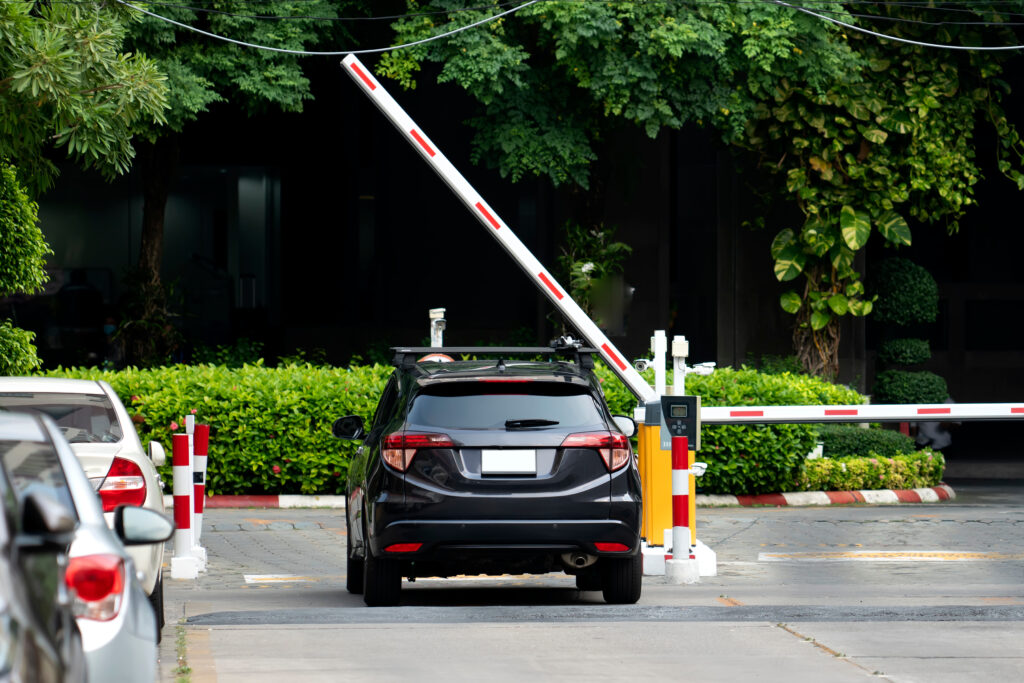
Physical security measures like gates and barriers help control access, allowing only authorized vehicles to pass through. Businesses can use them in tandem with security personnel who allow certain vehicles access. Companies that want to balance security and operational efficiency can integrate them with automated controls and technology like badge readers, keypads, or remote operator stations. These systems also help prevent tailgating (when an unauthorized vehicle attempts to follow an approved one through an access point).
Pedestrian Access Control Through Perimeter Design
Vehicles aren’t the only element to consider when crafting a physical security plan. It’s also critical to assess where, how, and if pedestrians can access the property. Options like pre-hung pedestrian swing gates and turnstiles can help secure access points where people enter on foot. Access control components such as electrified locks and panic bars can enhance those options to provide a more comprehensive solution to any business’ security needs.
The key to pedestrian access control is allowing smooth movement for foot traffic control. At the same time, it should prevent unauthorized access and preserve (and enhance) safety and compliance with the American Disabilities Act (ADA).
Custom-Engineered Perimeter Solutions
Security is not always standard. Sometimes, existing, off-the-shelf options meet all requirements, but when they don’t fit all the needs of a site, having access to custom-engineered solutions makes all the difference.
TYMETAL offers a design-build approach ideal for sites with unique layouts and security requirements. Additionally, working with our team makes it easy to design a customized, multilayered perimeter security plan with barriers, gates, and access controls.
Addressing Modern Threats to Business Security
Today’s business landscape is increasingly complex. Physical threats, such as unauthorized access to information and digital systems, theft, and property damage are among the chief concerns of businesses of all sizes. Ram-raiding — a growing trend where criminals use stolen vehicles to smash through storefronts or facility entrances — has been steadily increasing in major cities like San Francisco, Los Angeles, and Chicago, leaving retailers and businesses with millions in damages each year.
The impact isn’t limited to retail. Critical infrastructure and high-security facilities such as data centers, utilities, and healthcare organizations face even greater risks, as breaches at these sites can disrupt essential services and compromise public safety.
To stay protected, businesses must adapt to evolving threats by integrating both cybersecurity and physical security strategies. Perimeter protection plays a vital role in addressing today’s challenges and ensuring security plans remain effective against emerging attack methods.
Business Security ROI & Cost Justification
Research conducted in tandem by Ponemon Institute and IBM reveals that annual data breaches cost an average of $4.4 million. Cybersecurity measures aren’t the only protection needed to avoid these staggering costs. Physical security limits unauthorized individuals from accessing networks, information, and data that could cost businesses both money and their reputations.
Vehicle attack incidents have been steadily rising since 2014, highlighting the importance of perimeter security strategies. Rising costs associated with physical security incidents also underscore the importance of the investment. Data from the latest World Security Report revealed that in 2022, businesses lost more than $1 trillion due to physical security issues.
Physical security measures like gates, barriers, and bollards help reduce property damage and protect human lives. Add in potential liability costs and the losses associated with unplanned downtime, and it’s easy to understand the potential return on investment for these measures.
Security-minded perimeter investments can also help businesses build value and save on insurance costs. Protecting the premises from theft, vandalism, and other breaches offers long-term benefits and immediate peace of mind.
Next Steps for Implementation
Ready to get started? Before implementing perimeter security solutions, it’s necessary to conduct a perimeter security assessment. Doing so involves collecting data on the property and local or regional threats before conducting a visual inspection. Assessing traffic volume and identifying the most vulnerable entry points can help inform the physical security strategy. It will also guide the business’ selection of gates and barriers suitable for its threat level.
Working with the experts at TYMETAL can help ensure the best possible results. From standard options to custom-engineered perimeter protection solutions, TYMETAL approaches every project with the focus and precision required for high-security environments. Educational institutions, data centers, commercial properties, government buildings, military installations, airports, and financial institutions are just a few of the markets we serve.
Get in touch today to see how our team can help with your physical security strategy. For high-security perimeter security solutions and exceptional support throughout the lifespan of the project (and beyond), contact TYMETAL.
Frequently Asked Questions
Why is physical security important for my business?
Physical security is one of the most important business security solutions for protecting people, property, and assets. Without proper perimeter protection systems in place, businesses are vulnerable to theft, vandalism, unauthorized entry, and even vehicle-based attacks. High-security gates, crash-rated barriers, and access control systems serve as the first line of defense, reducing risk before threats reach buildings or sensitive areas. Strong physical security measures not only deter crime but also help safeguard sensitive information, minimize liability, and ensure business continuity in the face of evolving threats.
What are the key components of an effective physical security plan?
An effective physical security plan combines deterrence, detection, delay, and response. Core components typically include:
- Perimeter protection such as fences, crash-rated barriers, and security gates to prevent unauthorized vehicle or pedestrian entry.
- Access control systems like man-gates, badge readers, or automated entry solutions to regulate who enters and exits.
- Surveillance and monitoring to detect suspicious activity in real time.
- Emergency response protocols that ensure security teams and law enforcement can act quickly.
By layering these business security solutions, organizations can address vulnerabilities, reduce risks, and create a safer environment.
Which industries benefit most from high-security gates?
Every industry can benefit from physical security systems, but high-security gates are especially vital for sectors that manage critical assets or infrastructure. Government and military facilities rely on crash-rated barriers and perimeter protection systems to prevent unauthorized access, while data centers and financial institutions must secure sensitive information with reliable business security solutions.
Healthcare organizations and utilities face heightened risks since a physical security breach can directly impact public safety. Transportation hubs such as airports, seaports, and logistics centers also require advanced gate systems that integrate with vehicle access control to balance heavy traffic flow with strict perimeter security. Commercial and retail properties gain significant protection from robust gate systems, which help deter theft, vandalism, and the growing threat of ram-raiding.
What current threats should business owners be aware of?
Modern businesses face an expanding range of physical security threats. Common risks include burglary, vandalism, trespassing, and unauthorized access to restricted areas. More recently, vehicle-based attacks and ram-raiding have become major concerns, particularly for retailers and commercial facilities. Critical infrastructure, such as utilities, healthcare organizations, and transportation hubs, may also face targeted attacks or disruptions caused by civil unrest. By investing in perimeter protection systems, crash-rated barriers, and integrated access control solutions, business owners can proactively defend against these evolving threats and strengthen overall site security.
How do gates and barriers stop vehicle-based threats?
Crash-rated barriers and commercial security gates are specifically engineered to protect businesses against vehicle-borne threats. These physical security measures are rigorously tested to withstand impacts based on vehicle size, speed, and potential penetration distance. When strategically placed at entry points or high-risk areas, they serve as both a deterrent and a defensive measure, stopping vehicles before they can damage property or endanger people.
What maintenance is required for security gates and barriers?
Your installer will go over all product-specific instructions. Typically, security gates and barriers should be visually inspected at least monthly or weekly for high security properties. Other common maintenance includes lubricating moving components, calibrating automated systems, testing electrical components, and cleaning the gates with non-abrasive products.