Stadiums and arenas face a security challenge that few other venues encounter: thousands of people arriving in a narrow window, moving through a limited number of entry points, and leaving in an even tighter one. Whether the venue is hosting a Friday night football game, a sold-out concert, or a graduation ceremony, the underlying problem is the same. A large crowd needs to move safely, quickly, and without friction.
For athletic directors, venue operators, and campus safety leads researching stadium security, the goal usually isn’t a visible fortress. It’s a perimeter that controls access, stops a vehicle that shouldn’t be there, and still feels like a place people want to bring their families. That balance between genuine protection and a welcoming event atmosphere is where most research into this topic begins, and it’s the foundation TYMETAL has built its perimeter systems around for more than three decades.
If your venue is early in this process, our team is available to talk through what your specific layout and event schedule actually require.
Why Stadium Security Looks Different on Game Day Than Game Week
A venue’s risk profile changes completely depending on what’s happening that day. Stadium security on a quiet Tuesday practice looks nothing like stadium security during a championship game or a touring concert with thousands of fans arriving at once.
Concerts typically bring a single, massive entry surge followed by a hard-stop ending, since the show ends at a set time and everyone leaves within the same short window. Sports events behave differently. Game length can vary with overtime or delays, and a halftime lull creates a temporary dip in foot traffic before it picks back up again. Security for stadiums has to account for both patterns, not just one.
This is compounded by the mix of vehicles and pedestrians active on the same property at the same time. Tour buses, production trucks, rideshare drop-off, and general parking can all be moving simultaneously, often through the same entry roads used by fans on foot, which is exactly the kind of mixed traffic TYMETAL’s commercial gates are built to manage. A perimeter built for only one type of event, or only one type of movement, will struggle the moment the venue’s schedule changes.
Physical Security for Stadiums Starts at the Property Line
The property line is the first checkpoint, well before ticketing or credentialing come into play. Physical security for stadiums begins by identifying where vehicles and crowds are most likely to intersect and hardening those specific points, a process that starts with sound site planning for the property as a whole.
The highest-risk areas tend to be predictable: main gates, drop-off lanes, loading docks, tour bus staging zones, and plazas where fans or concertgoers gather before doors open. Crash-rated bollards and barriers are built to protect exactly these locations, stopping a vehicle before it reaches a crowd.
What matters just as much as the protection itself is how it looks. TYMETAL’s crash-rated bollards and barriers can be positioned to read as landscaping or architectural elements rather than obvious security infrastructure, so the perimeter stays protected without changing the feel of the venue.
Stadium Security Gates Built for Controlled, Fast-Moving Access
Stadium security gates exist to manage the entry points that aren’t meant for the general public. These secondary access points, staff lots, media entrances, service roads, and production vehicle access, are often the most overlooked, since they see constant use during setup and breakdown.
Touring concerts raise the stakes here. A traveling production brings outside vehicles and crews that a venue hosting only sports events doesn’t typically see, which means credentialed vehicle access needs to be reliable and repeatable across very different types of bookings.
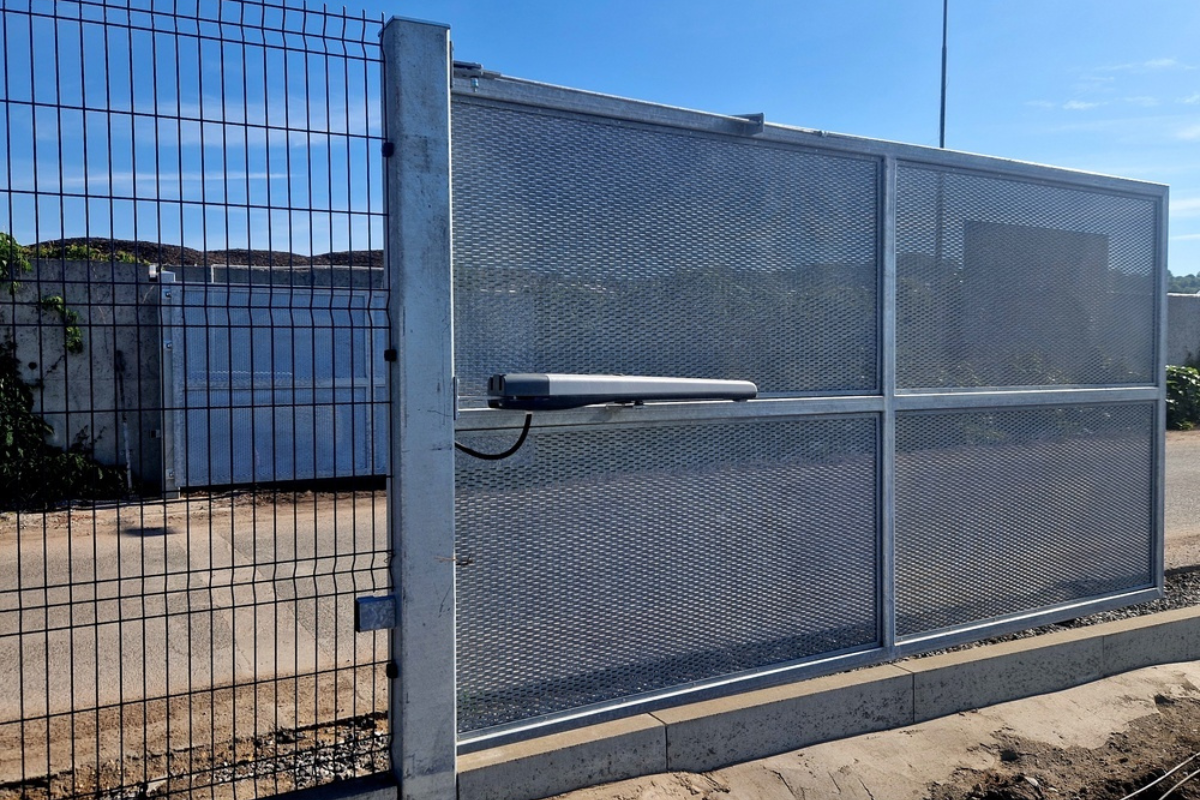
Automated vehicle gates, including slide and swing configurations, let approved traffic move through quickly while keeping the point secured the rest of the time. For access points that need both impact protection and daily operability, crash-rated gate systems bring the same level of vehicle protection as a fixed barrier to a gate that still opens and closes on demand.
Arena Security and the Challenge of Moving Thousands of People at Once
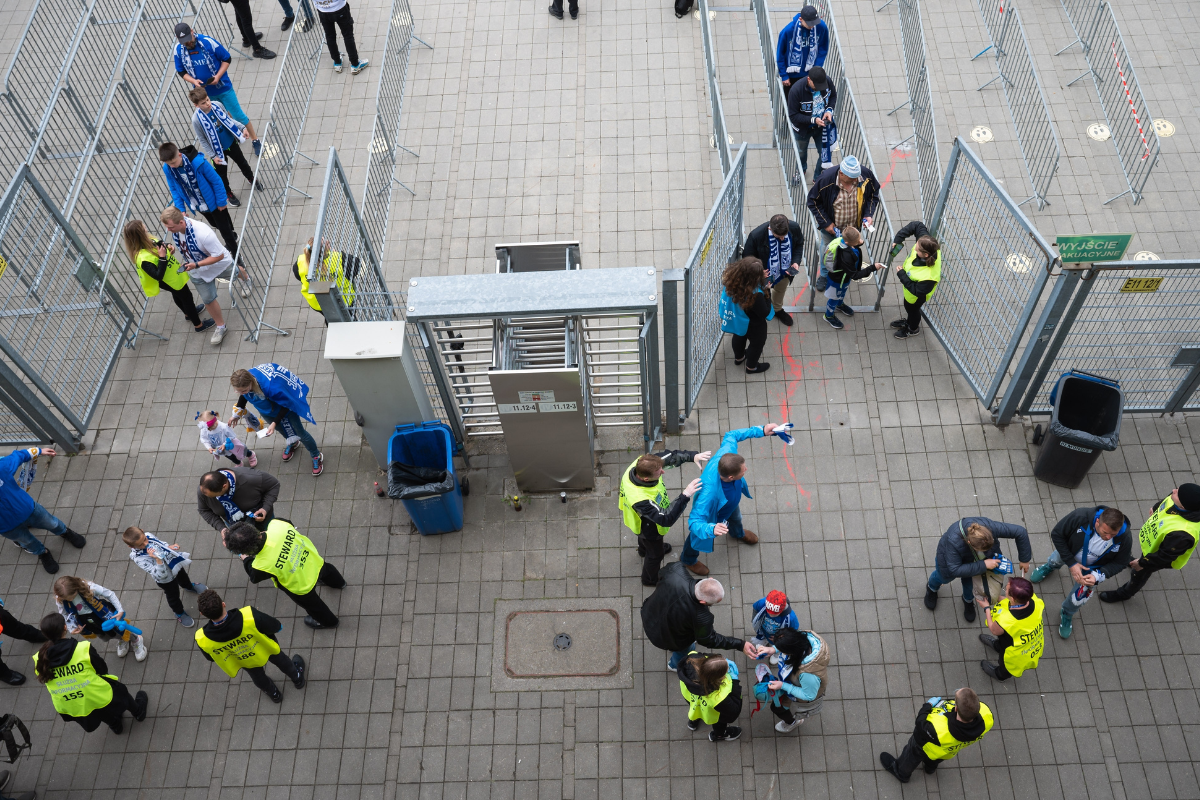
Arena security depends heavily on how well a venue manages pedestrian volume, particularly during the final minutes before an event starts and the surge immediately after it ends.
Concerts tend to produce one concentrated exit surge, since the show ends and the crowd leaves all at once. Sports events are more variable, but a game-winning moment or the final buzzer can create an equally sharp spike in a matter of seconds. Either way, the venue needs infrastructure built to handle that peak, not just average conditions.
Pedestrian gates give venues a way to shape that flow deliberately. Positioned at ticketed entry points or controlled internal thresholds, they create a clear, single-direction path that reduces bottlenecking without requiring a visible checkpoint. Commercial security for stadiums that host a wide range of events, from a Tuesday practice to a sold-out arena tour, needs pedestrian infrastructure that performs at both ends of that range.
Security Technology for Arenas That Scales to Any Level of Play
Security technology for arenas follows the same core principles whether the venue is a high school football stadium or a professional arena. What changes is scale, not strategy.
A high school stadium might concentrate its investment on a single well-protected main entrance and drop-off lane. A college or professional venue, juggling multiple gates, media entrances, and VIP areas on the same night, needs a broader system of gates and barriers working together. Neither approach is more or less secure. Each is sized to the crowd it’s actually protecting.
This same logic applies across event types. A venue that hosts football games in the fall and concerts in the summer doesn’t need to reconfigure its perimeter for each one. A well-designed system flexes to whatever is booked that week.
Where Security Stops Being Something Attendees Notice
The venues that get this right share a common trait: their security doesn’t announce itself. Bollards read as landscaping. Gates operate quickly enough that fans and concertgoers barely register them. Pedestrian flow feels organized rather than restricted.
That’s the standard worth researching toward: security measures that are unmistakably serious about protecting people, without asking attendees to feel like they’re passing through a checkpoint on their way to a game or a show.
TYMETAL has spent more than 35 years manufacturing perimeter security equipment in the United States, working with venues that need dependable protection at scale, across every level of play and every type of event. For decision makers early in the research process, contact our team to help you compare options for your specific venue.
Frequently Asked Questions
What is the most effective security measure for a stadium or arena perimeter?
Vehicle access control at points where crowds gather is typically the highest priority. Crash-rated bollards and barriers placed at drop-off zones, loading docks, and main gates stop a vehicle threat before it reaches pedestrians, making perimeter hardening the foundation of stadium and arena security.
How does security differ between sporting events and concerts at the same venue?
Concerts usually create one large entry surge and a single concentrated exit at a fixed end time. Sporting events are less predictable, with halftime lulls and sudden spikes during overtime or a final play. A well-designed perimeter accounts for both patterns rather than one.
Can stadium security equipment stay visually unobtrusive?
Yes. Crash-rated bollards and barriers can be positioned to blend into landscaping or architectural features rather than reading as visible security infrastructure. This allows venues to meet vehicle impact protection standards while maintaining a welcoming atmosphere for fans and attendees.
Do stadium security gates slow down staff, media, or production access?
Automated stadium security gates are built to move quickly for approved traffic while staying secured the rest of the time. This lets staff, media, and touring production crews pass through efficiently without leaving service entrances open or unmonitored between uses.
Does a high school stadium need the same security technology as a professional arena?
The core principles are the same, but the scale differs. A high school venue typically needs one well-protected main entrance and drop-off area, while a professional arena requires multiple secured gates and barriers operating at once across simultaneous entry points.