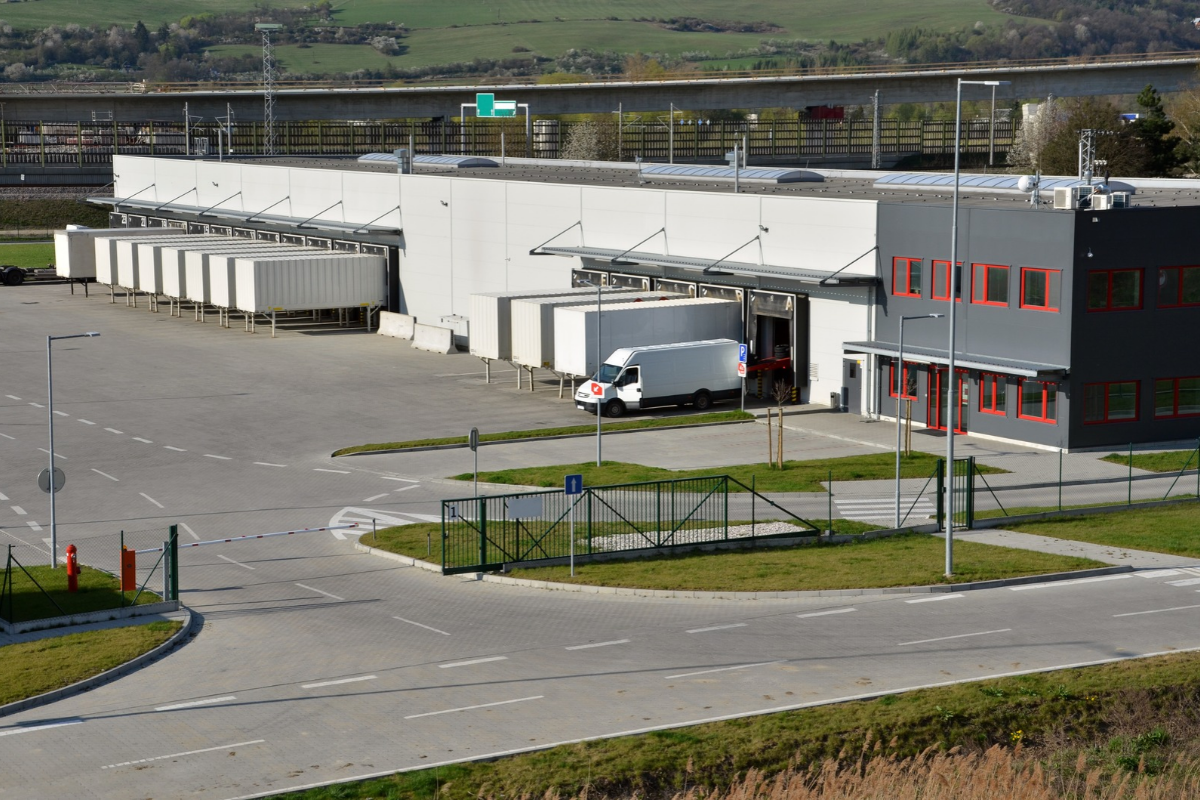
Distribution center security is tested most often at the vehicle entry point. On any given day, a single truck entrance may process carriers, owner-operators, contractors, and employees, many of whom the facility has never seen before. Each arrival is a decision the site has to make quickly, and the gate is where that decision becomes physical. Getting the entry point right means balancing two pressures that rarely agree: the need to control who comes onto the property and the need to keep freight moving on schedule.
Why the Truck Gate Carries the Most Weight in Distribution Center Security
Most of a distribution center’s perimeter is static. Fence lines stay closed, and the building envelope rarely changes. The truck gate is different. It opens and closes hundreds of times a day, and it is the one point where outside vehicles are expected to cross the property line.
That makes the gate the logical starting point for cargo theft prevention and broader logistics security planning. Loaded trailers, high-value inventory, and the yard itself are all within reach once a vehicle clears the entrance. A well-planned entry point does not need to stop every threat on its own, but it should make unauthorized access slow, visible, and difficult. When the gate performs that role reliably, every other layer of the security program becomes easier to manage.
Separate Truck, Employee, and Visitor Traffic Before Specifying a Single Gate
One of the most common planning mistakes is selecting a gate before deciding how traffic should be divided. A distribution center typically serves at least three distinct groups: commercial trucks, employee passenger vehicles, and visitors or vendors. Each group arrives with different frequency, different verification needs, and different vehicle sizes.
Routing all of them through one opening forces the gate to serve conflicting purposes. Trucks need wide clearances and time for check-in, while employee traffic needs speed during shift changes. Separating these flows into dedicated lanes, or entirely separate entrances, allows each gate to be sized and configured for the job it actually performs. For facilities planning several lanes at one entrance, our guide to Multi-Lane Vehicle Entry Zones covers how lane layout affects both throughput and control.
Match the Industrial Sliding Gate to Duty Cycle, Not Just Opening Width
Opening width is usually the first number on a gate specification, but at a distribution center, duty cycle matters just as much. A gate that opens a few times a day and a gate that cycles continuously through three shifts face very different wear. Specifying for the actual cycle count, and pairing the gate with an operator designed to work with it, is what keeps an entry point dependable through years of heavy use.
Cantilever Slide Gates for Wide, High-Cycle Truck Entrances
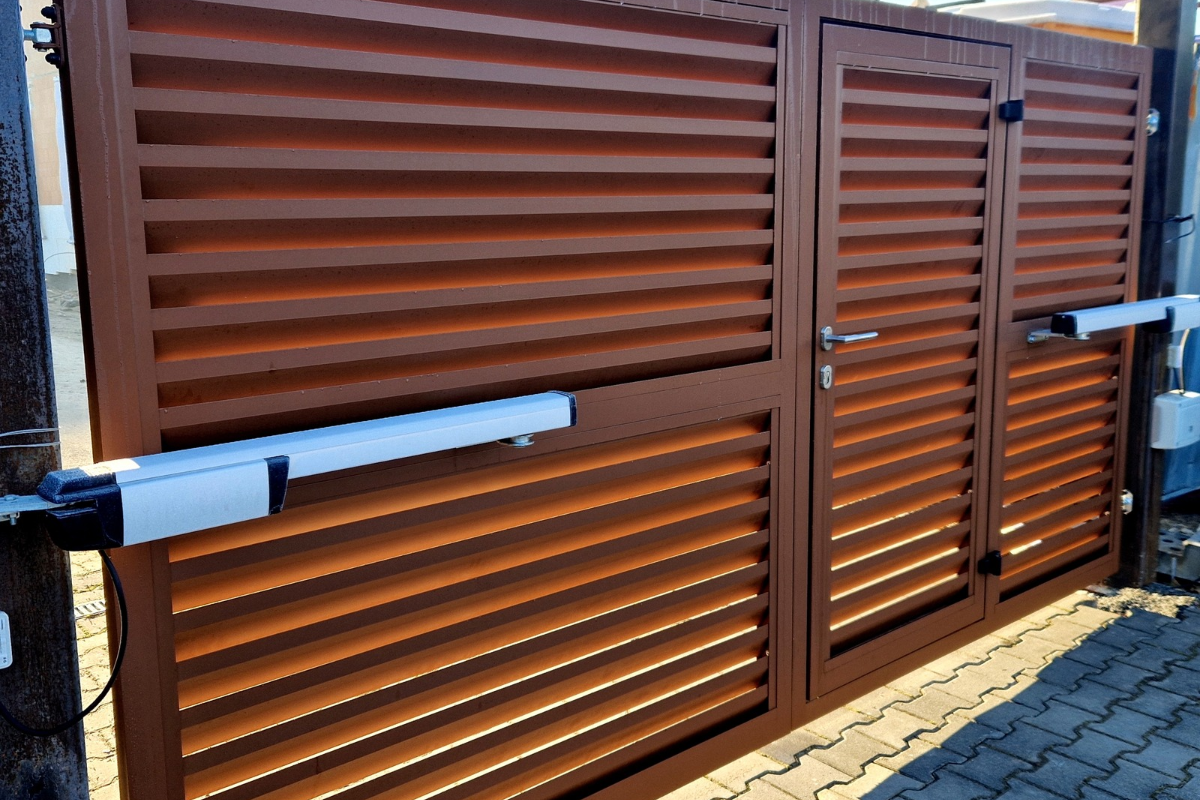
Cantilever slide gates are well suited to truck entrances where lateral space is available along the fence line. Because the gate travels without a ground track across the opening, nothing sits in the drive path to collect debris or take damage from heavy vehicles. TYMETAL Cantilever Slide Gates are manufactured from aluminum for corrosion resistance and use truck assemblies tested under extreme load and weather conditions. For projects on a tight timeline, In-Stock Gates ship from stocking locations across the U.S.
Vertical Lift Gates Where Lateral Space Runs Out
Not every site has room for a slide gate to retract. Where buildings, loading areas, or property lines limit lateral clearance, Vertical Lift Gates open upward rather than sideways. They are also specified where rapid cycling or higher security ratings are required, which makes them worth considering at busy entrances with constrained footprints.
Give Vehicle Access Control Room to Work Off the Public Road
Verification takes time, and that time needs space. When the staging area between the public road and the gate is too short, trucks waiting for check-in back up onto the roadway. This creates traffic hazards and puts pressure on staff to wave vehicles through without full verification, which defeats the purpose of the gate.
Effective vehicle access control depends on adequate stacking depth inside the property line. A common approach is to set the primary security gate far enough into the site that several trucks can queue without spilling onto public roads. Some facilities add a second barrier, such as a barrier arm or inner gate, to create a controlled zone where vehicles are checked before reaching the yard. TYMETAL gates can be configured with access control integrations to meet site-specific requirements, allowing the physical barrier to work alongside the facility’s own verification process.
Decide Where Crash-Rated Gates Belong in Logistics Facility Security
Not every distribution center needs hostile vehicle mitigation at its entrance. For many sites, a durable, well-maintained security gate meets the realistic risk profile, and applying crash-rated protection everywhere can add complexity without a proportional security benefit.
There are situations, however, where crash-rated gates are warranted. Facilities storing pharmaceuticals, high-value electronics, or controlled materials may face a higher risk of forced entry. Distribution centers near critical infrastructure, or those supporting government work, may also be held to stricter requirements. In these cases, TYMETAL Crash-Rated Barriers include gates, bollards, beams, and fence independently tested and certified to ASTM F2656 and U.S. government crash standards. Bollards can also protect building entrances and equipment near the gate line.
Carry Warehouse Access Control Past the Gate to the Trailer Yard
A gate is only as effective as the perimeter around it. If the fence line beside a well-secured entrance is easy to breach, the gate simply redirects intruders to a weaker point. Truck yard security depends on treating the fence, the gate, and the yard as one system.
Trailer theft prevention is a clear example. Trailers staged in the yard, particularly those dropped overnight or over weekends, are vulnerable if the yard perimeter is not continuous and controlled. Secondary gates between the main yard and high-value staging areas add another layer of protection. Pedestrian movement deserves the same attention. Drivers walking to a check-in window and employees crossing between parking and the building should move through dedicated Pedestrian Gates rather than vehicle lanes, which keeps people out of truck traffic and keeps pedestrian access under control.
Treat Gate Uptime as a Security Requirement
A gate that is out of service is often left open, and an open gate is an open perimeter. At a distribution center running around the clock, even a short outage can expose the facility during the hours when it is busiest and hardest to monitor.
This is why durability belongs in the security conversation, not only the maintenance budget. Components built for heavy cycling, gates and operators designed to work together, and a clear maintenance plan all reduce the chance of an unplanned failure. TYMETAL cantilever slide gates include a five-year warranty on W4 and S8 truck assemblies as a standard feature, reflecting the demanding daily use these gates are built to handle.
Securing Distribution Centers With U.S.-Manufactured Perimeter Systems
Distribution center security works best when the vehicle entry point is planned as part of the whole site, with traffic separation, staging depth, perimeter continuity, and long-term reliability considered together. TYMETAL has designed and manufactured perimeter security systems in the United States for more than 35 years, and our team can help you evaluate the right gate and barrier configuration for your facility. Contact TYMETAL to discuss your project.
Frequently Asked Questions
What is the most important area to secure at a distribution center?
The vehicle entry point is usually the most important area to secure at a distribution center. It handles the highest volume of outside traffic, including carriers the facility may not know. A well-planned truck gate, supported by a continuous fence line and adequate staging space, makes unauthorized access slower, more visible, and more difficult.
What type of gate works best for a distribution center truck entrance?
Cantilever slide gates are a common choice for distribution center truck entrances because they span wide openings without a ground track in the drive path. Where lateral space is limited, vertical lift gates open upward instead. The best fit depends on opening width, available clearance, traffic volume, and how often the gate cycles each day.
How can distribution centers prevent trailer theft in the yard?
Distribution centers can reduce trailer theft by keeping the entire yard perimeter continuous and controlled, not just the main gate. Secondary gates around high-value staging areas add another layer of protection. Separating pedestrian access from vehicle lanes and keeping gates in reliable working order also help ensure trailers left overnight stay inside a secured perimeter.
Do distribution centers need crash-rated gates?
Not every distribution center needs crash-rated gates. Many sites are well served by a durable, properly maintained security gate. Crash-rated gates, bollards, and beams make sense for facilities storing high-value or controlled goods, sites near critical infrastructure, or locations with contractual security requirements. A site-specific risk assessment should guide the decision.
How do you keep trucks from backing up at a secured entry gate?
Trucks back up at secured gates when there is not enough staging space between the public road and the checkpoint. Setting the security gate deeper into the site allows several vehicles to queue on the property. Separating truck lanes from employee traffic and using a gate sized for its duty cycle also keeps entry moving.