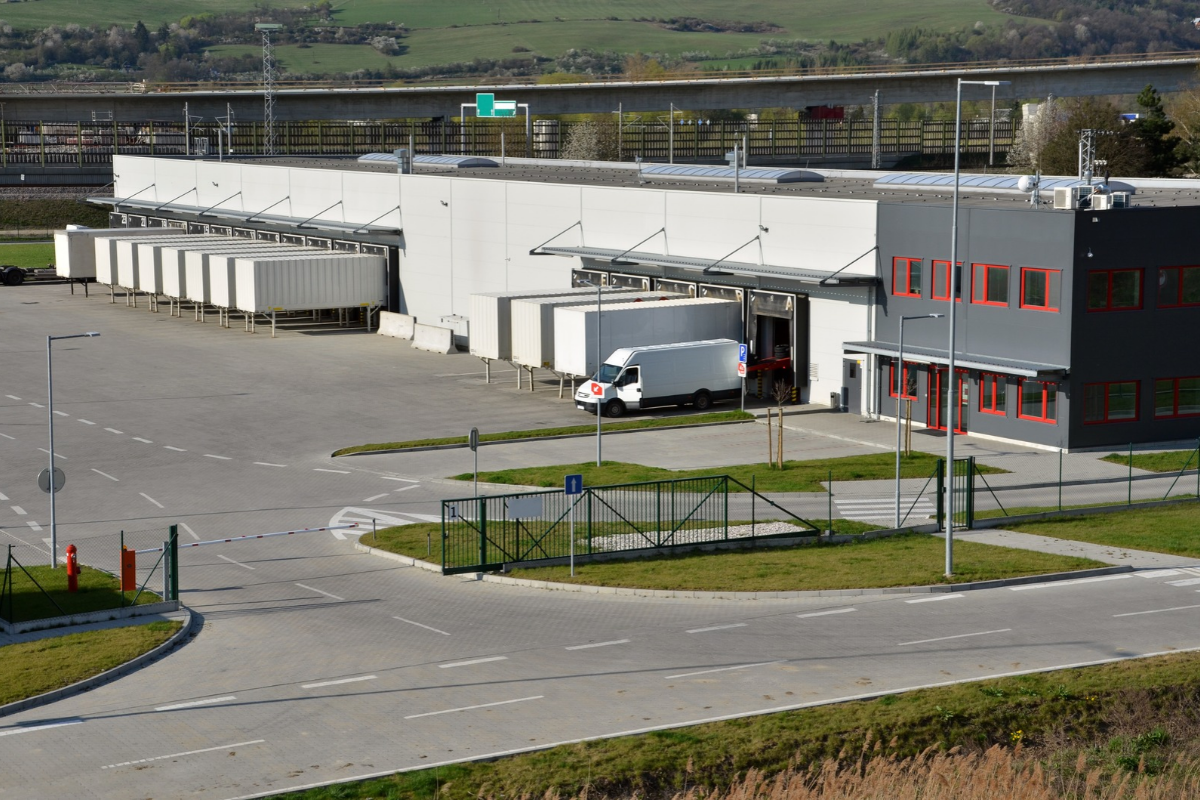
Airport service roads carry a constant flow of ground support vehicles, fuel trucks, catering vehicles, and maintenance crews moving between the landside and the secured airfield. These routes are functional by design, built for speed and repeated access rather than the screening process at a passenger terminal entrance. That same functionality makes service roads one of the more exposed points in an airport’s perimeter, and a strong airport perimeter security approach has to balance that operational speed against the access control standards that govern the Air Operations Area (AOA).
Why Service Roads Are a Vulnerable Point in Airport Perimeter Security
A passenger checkpoint is built around screening people. A service road is built around moving vehicles quickly and repeatedly, often around the clock. That difference changes the security calculus. Gates on these roads need to authenticate a driver, verify a vehicle, and cycle open and closed fast enough to keep ground operations on schedule, all without weakening the barrier itself.
The proximity of these roads to sensitive areas raises the stakes further. A breach on a service road puts a vehicle directly onto the airfield, near aircraft, fuel storage, and taxiway traffic, which is a different risk profile than a typical commercial entrance. Multiple drivers and vehicle types use the same access points throughout the day, so the gate and barrier system has to hold up to that repeated use without becoming the weak point in an otherwise secure perimeter.
Crash-Rated Gates as a Core Layer of Airport Perimeter Security
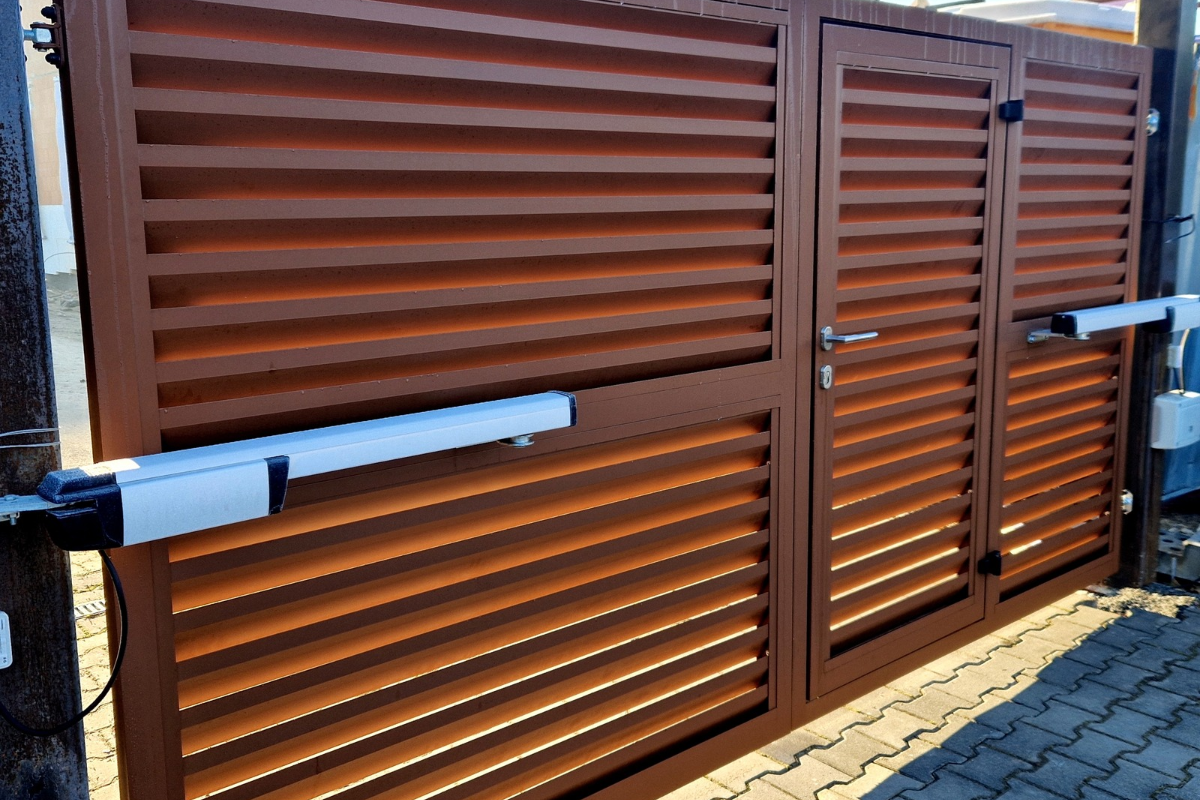
For access points where an unauthorized or hostile vehicle intrusion is a realistic risk, crash-rated gates give airports a tested physical barrier. TYMETAL’s crash-rated cantilever slide gates are tested and certified to ASTM F2656 and U.S. Department of State K-rating standards, with K4 and K12 certifications available depending on the threat level a given access point requires. The cantilever design suits high-traffic service roads specifically because it does not rely on a ground-level track. Roads that see constant vehicle traffic accumulate debris and ice that can interfere with track-based systems, and a track failure at the wrong moment turns a security gate into a liability. A cantilever gate avoids that failure point while still closing a wide opening in a smooth, linear motion.
Where a service road needs an especially wide clearance, such as routes running near runway or taxiway edges, TYMETAL’s Box Frame Roller Gate system can span openings up to 500 feet, giving airports a way to secure large-format access points without compromising crash resistance.
Balancing Traffic Flow With Airport Perimeter Security Standards
Service roads see the same drivers moving through the same access points on a daily schedule. A gate system that treats every pass like a first-time visitor slows ground operations and creates backups, and a queue of idling vehicles at a perimeter gate is its own kind of exposure.
TYMETAL engineers its gate systems for integration with UL 325-compliant automated operators, which allows airports to pair a crash-rated physical barrier with the access control and AOA credentialing systems already in place. The gate stays a known, tested barrier while the authentication layer above it can be tailored to how a given airport already manages driver and vehicle credentials.
Fencing and Barriers That Complete the Perimeter
A gate only secures the opening. The fencing and barriers around it have to hold to a comparable standard, or the gate becomes the strongest link in an otherwise weaker chain.
Crash-Rated Fencing
TYMETAL’s crash-rated fencing can be installed as standalone perimeter protection or layered in front of or behind an existing fence line, giving airports a way to harden a service road corridor without necessarily replacing fencing that is otherwise still functional.
Crash-Rated Bollards
For shorter, high-exposure stretches, such as areas adjacent to fuel farms or aircraft parking, crash-rated bollards add a layer of vehicle intrusion protection without obstructing pedestrian or ground crew movement.
Barrier Arms
Crash-rated barrier arms give airports a way to control routine vehicle access at lower-risk points along the perimeter, closing the gap between a fully secured gate and an open roadway.
Planning an Airport Perimeter Security Upgrade for Service Roads
Every service road is shaped by the airport around it. Clearance width, traffic volume, ground conditions, and the credentialing system already in place all affect which gate style and crash rating make sense for a given access point. A road built for infrequent maintenance access does not need the same configuration as a primary fuel truck route running along an active taxiway.
Key planning considerations include:
- Proximity of the road to fuel storage, aircraft parking, or active taxiways
- Traffic volume and the types of vehicles using the access point
- Available clearance width and ground conditions
- Existing AOA credentialing and access control systems
- Whether the road serves routine maintenance access or higher-frequency operational traffic
Working through those variables early, ideally alongside a team that designs and manufactures the gates rather than simply distributing them, tends to produce a system that fits the site instead of forcing the site to accommodate a standard product. TYMETAL has spent more than 35 years manufacturing perimeter security products domestically, including the crash-rated gate and fencing systems that protect airport service roads at facilities across the country. Contact our team for more information regarding site planning and airport perimeter security plans.
Frequently Asked Questions
What is airport perimeter security and why does it matter on service roads?
Airport perimeter security refers to the gates, fencing, and barriers that control vehicle and pedestrian access around an airfield. Service roads are a key focus because they carry constant vehicle traffic close to aircraft, fuel storage, and taxiways, making a strong physical barrier essential to preventing unauthorized access.
What crash rating do airport perimeter security gates typically need?
It depends on the access point’s proximity to sensitive areas like fuel storage or aircraft parking. Many service road gates are specified at K4 or K12, tested to ASTM F2656 and U.S. Department of State standards, based on a site-specific threat assessment.
Why are cantilever gates commonly used in airport perimeter security?
Cantilever slide gates do not rely on a ground-level track, which makes them well suited to roads with heavy, constant vehicle traffic where debris and weather can interfere with track-based systems. They open in a smooth linear motion and are available in crash-rated configurations.
Can airport perimeter security gates be automated for high-frequency access?
Yes. Crash-rated gates can be engineered for integration with UL 325-compliant automated operators, allowing airports to pair a tested physical barrier with existing access control and credentialing systems for faster, repeatable vehicle access.